The Weight Behind the Push: How Real Tug Selection Logic Works and What It Means for Your Simulation
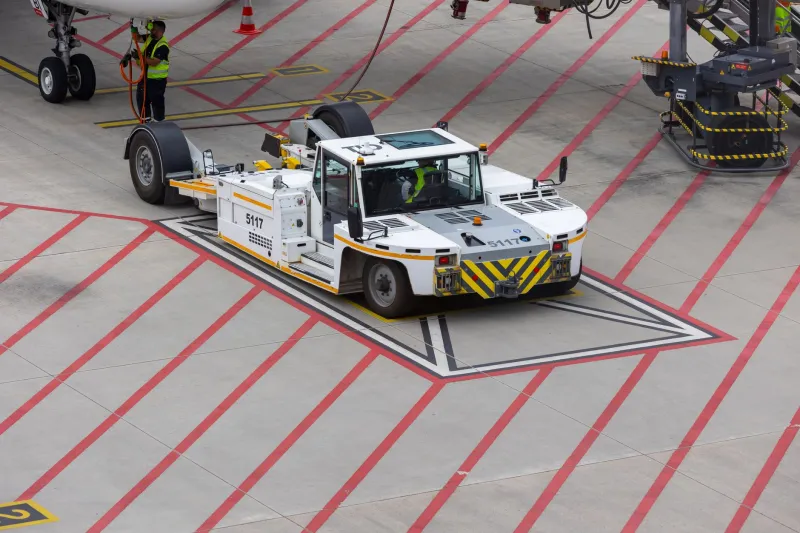
In the world of high-fidelity flight simulation, pushback is frequently treated as a procedural formality — press the key, watch the aircraft roll backward, and move on to taxi. For simmers committed to genuine operational authenticity, however, that approach leaves a significant gap in realism. The selection of ground support equipment for aircraft movement is, in actual airline and ground handling operations, a disciplined engineering calculation. Understanding that calculation transforms pushback from a passive animation into an active decision that meaningfully shapes your gate departure sequence.
The Core Variables in Tug Selection
Real-world ground handling coordinators — and the dispatchers who oversee their work — evaluate four primary variables when determining which tractor, or combination of tractors, is appropriate for a given pushback.
Maximum Tow Weight (MTW). Every aircraft type has a published Maximum Tow Weight, which may differ from its Maximum Takeoff Weight. The MTW reflects structural limits on the nose gear and tow bar attachment points under the lateral and compressive forces generated during ground movement. A tug rated below the aircraft's current gross weight is not merely underpowered — it is a safety violation. Ground handlers cross-reference the aircraft's actual loaded weight, obtained from the load manifest, against both the MTW and the tug's rated capacity before any movement begins.
Wheelbase and Nose Gear Geometry. The distance between the nose gear and the main gear determines the arc radius the aircraft traces during a pushback turn. Longer wheelbase aircraft — wide-body jets like the Boeing 777 or Airbus A350 — require more physical clearance to execute the same angular displacement as a narrow-body. This directly influences whether a single tug positioned on the nose gear can complete the intended pushback arc without the main gear tracking into adjacent aircraft, ground equipment, or terminal structures.
Pavement Grade and Surface Condition. Pushback is not always performed on level ground. Many US hub airports feature ramp areas with grades of one to three percent — subtle to the eye but significant to a tug operating near its rated capacity. On a downgrade push, the tug must actively brake to control the aircraft's momentum. On an upgrade push, it must generate additional tractive effort to overcome both inertia and gravity. Surface contamination from rain, snow, or spilled fluids further degrades the effective traction available.
Gate Geometry and Clearance Constraints. The physical layout of the gate — including the positions of adjacent parked aircraft, ground service vehicles, fuel pits, and terminal structures — defines the maximum permissible pushback arc. In congested terminal environments, a standard single-tug pushback may not generate sufficient lateral displacement to clear the aircraft's tail from an adjacent gate's jetway. In those cases, a two-stage pushback, or the coordinated use of a second tug on the main gear, may be required.
How Dispatchers Build the Tug Requirement
The actual decision process used by experienced ground operations dispatchers is more systematic than it might appear from the ramp. At major US carriers, the process typically follows a tiered logic:
Tier One: Aircraft Category Lookup. The dispatcher references the airline's Ground Operations Manual, which categorizes every operated aircraft type by its tug requirement class. A regional jet like the Embraer E175 falls into a light tractor category. A narrow-body like the Boeing 737 MAX 8 falls into a medium tractor category. A wide-body like the Boeing 787 requires a heavy-duty towbarless or conventional tug rated for weights exceeding 400,000 pounds. This categorical assignment provides the baseline equipment selection.
Tier Two: Weight Verification. The categorical baseline is then validated against the actual loaded weight for the specific departure. If an aircraft is operating at an unusually high gross weight — a long-haul departure with full fuel and maximum payload — the dispatcher confirms the selected tug's rated capacity covers the actual figure with an appropriate safety margin, typically 10 to 15 percent above the aircraft's loaded weight.
Tier Three: Environmental Adjustment. The baseline selection is adjusted for pavement grade and surface conditions. Dispatchers at airports with known steep ramp grades — Denver International's north concourse, for example — maintain standing equipment upgrades for certain gate positions regardless of aircraft weight category.
Tier Four: Geometric Clearance Check. Finally, the dispatcher or lead ramp agent reviews the gate's published pushback diagram — a document maintained in the airline's airport-specific Ground Handling Procedures — to confirm the planned arc is achievable with the selected equipment. Gates with restricted clearance envelopes carry notations specifying maximum aircraft types and required tug configurations.
Applying This Framework in Simulation
For simmers operating within platforms that support custom pushback scripting — including MSFS with compatible add-ons, Prepar3D with GSX Pro, or X-Plane with JARDesign Ground Handling — the dispatcher's four-tier logic translates into a practical pre-pushback checklist.
Before initiating any pushback, identify your aircraft's current loaded weight from the sim's fuel and payload menus. Cross-reference that weight against the published MTW for your aircraft type, which is available in the aircraft's simulated Airplane Flight Manual or from publicly available type certificate data. Confirm your selected tug — if the add-on provides equipment selection — is rated appropriately.
Next, review the gate geometry at your departure position. Most high-quality US airport mods include pushback arc diagrams in their documentation, or you can reference the FAA's published airport diagrams for gate spacing data. If your planned pushback arc would track the tail within ten feet of an adjacent structure, plan a two-stage push or request a modified arc from the ground controller.
Finally, account for pavement grade. The FAA's Airport/Facility Directory lists ramp and apron grades for certificated airports. If your departure gate sits on a grade exceeding one percent, mentally apply the dispatcher's conservative bias — assume you need more tractor capacity than the categorical baseline suggests.
Why This Matters Beyond Procedure
The reason tug selection logic deserves serious attention from simulation enthusiasts is not merely procedural completeness. It is that the variables governing tug selection — weight, geometry, grade, and clearance — are precisely the variables that determine whether a pushback looks and feels physically convincing. A 777 pushed back from a tight gate with the same animation parameters as a CRJ-700 will always feel wrong, even to observers who cannot articulate why. The physics of mass, arc radius, and tractive effort are perceptible even in simulation.
Building the dispatcher's methodology into your pre-departure workflow is, ultimately, an investment in the coherence of everything that follows.