Crooked Gates, Clean Docks: Mastering Asymmetrical Approach Geometry in Flight Simulation
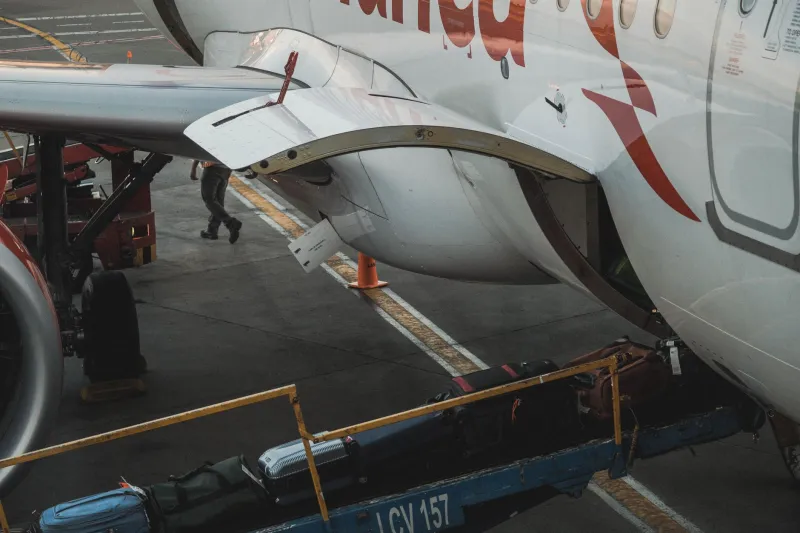
There is a particular frustration that experienced flight simulation pilots know well: the gate that looks straightforward on the taxiway diagram but becomes an entirely different problem the moment the nose swings into the ramp. Wings clear. Ground crew is in position. The lead-in stripe is visible. And yet, something is geometrically wrong — the centerline does not align with the aircraft's natural tracking path, the stop bar appears offset, and the marshaller's paddles are doing something that does not correspond to what the cockpit view is communicating. Welcome to asymmetrical gate geometry, one of the most underappreciated challenges in realistic airport operations simulation.
Mastering these approaches is not a matter of reflexes. It is a matter of reading the environment correctly, building the right mental model before the final turn, and applying inputs so measured that the aircraft barely registers them as corrections. This guide is designed to develop exactly that skill set.
What Makes a Gate Asymmetrical
In an ideal world, every gate would present a perfectly centered lead-in line, unobstructed sightlines, and standard markings on both sides of the aircraft. Real airports — and the high-fidelity add-on packages that replicate them — rarely cooperate with that ideal.
Asymmetrical gate geometry arises from several real-world sources. Older terminals at airports like Chicago O'Hare (KORD), Philadelphia International (KPHL), and Boston Logan (KBOS) were constructed before modern ramp standardization guidelines existed, meaning jetways, ground service corridors, and structural pillars frequently encroach on one side of the approach path. Regional concourses at airports such as Charlotte Douglas (KCLT) and Dallas Love Field (KDAL) often feature gates angled several degrees off perpendicular to the taxilane, a design compromise driven by terminal footprint constraints. Additionally, certain gate configurations place visual obstructions — fuel trucks, adjacent parked aircraft, or ground power unit stations — asymmetrically relative to the approaching aircraft, degrading depth perception on one side while leaving the other side visually clear.
The result is an approach environment where the pilot's instinctive spatial reference points are unreliable, and where small uncorrected deviations compound into significant misalignment at the stop point.
Building the Reference Point Framework Before the Turn
Professional ramp operations training emphasizes a principle that translates directly into simulation practice: the quality of your dock is largely determined by decisions made before you begin the final approach turn. By the time the aircraft is committed to the gate heading, corrective options are limited and the cost of each input is amplified.
The first discipline to develop is gate reconnaissance during taxi. As the aircraft approaches the ramp entry, use whatever camera system or external view your simulator supports to identify three reference elements: the position of the stop bar relative to the gate centerline, the location of any asymmetrical obstructions on either side of the approach corridor, and the angular relationship between the lead-in stripe and the taxilane you are exiting.
For gates with a known angular offset — common at regional gates in the B and C concourses at airports like Denver International (KDEN) — the correction strategy must be established before the turn begins. If the gate is angled five degrees to the right of the natural exit heading from the taxilane, the aircraft must be positioned slightly left of the taxilane centerline prior to the turn so that the arc of the turn terminates on the gate's actual centerline rather than on a parallel track offset to the right.
This pre-positioning technique is what separates pilots who fight the gate from those who flow into it.
Reading Micro-Deviations During the Final Approach
Once the aircraft is committed to the gate heading and rolling at a controlled taxi speed — typically between two and four knots for a final approach in simulation — the pilot's attention must shift to reading micro-deviations in real time.
The most reliable reference for centerline tracking is not the painted lead-in stripe itself, but the relationship between the stripe and the nose wheel's position relative to the cockpit's forward reference point. In wide-body simulation, this means understanding where the nose wheel sits relative to what the pilot sees over the glareshield. In narrow-body simulation, the geometry is tighter and deviations become apparent more quickly.
A useful frame-by-frame discipline is the three-second check: every three seconds of forward movement, assess whether the lead-in stripe is drifting left or right relative to the cockpit reference point. A drift of even half a stripe width at 50 feet from the stop bar translates into a nose wheel position that may be outside acceptable limits at the dock. The correction required at 50 feet is a steering input so subtle it barely registers — but it must be applied without hesitation.
For asymmetrical gates where one side has a visual obstruction, the temptation is to steer away from the obstruction instinctively. Resist this. The obstruction creates a perceptual illusion of reduced clearance that is often greater than the actual spatial constraint. Trust the centerline reference, not the proximity impression.
Throttle and Brake Discipline in Tight Geometry
Asymmetrical gates frequently require the pilot to manage speed while simultaneously processing an irregular visual environment, which creates a cognitive load that can degrade brake modulation quality. The standard recommendation in real-world ramp training — and one that applies directly to simulation — is to establish the target approach speed before the final turn and treat the throttle as essentially frozen from that point forward.
In simulation terms, this means arriving at the gate heading already at two to three knots with idle thrust set. Any speed management from that point is accomplished through brake pressure alone, applied symmetrically unless a specific ground surface condition demands otherwise. Asymmetrical brake inputs during a final gate approach introduce yaw that will compound any existing tracking error.
For aircraft with nose wheel steering that remains active at low taxi speeds — a characteristic modeled with varying fidelity across different simulation platforms — steering inputs should be applied in the shortest possible duration. A half-second correction input is almost always sufficient at final approach distances. Inputs held longer than one second at speeds below three knots routinely produce overcorrection.
Practicing the Problem: Recommended Scenarios for US Simmers
Building competence with asymmetrical gate geometry requires deliberate, repeated exposure to the specific conditions that create the problem. The following gate environments, available in widely used US airport add-on packages, offer a structured progression from moderately challenging to genuinely demanding:
Entry level: Gates B20–B28 at KBOS Logan, where moderate angular offsets and adjacent infrastructure create a manageable introduction to non-standard approach geometry without severe obstruction challenges.
Intermediate: Regional gates at KORD O'Hare's Terminal 2, where older concourse architecture produces approach corridors with meaningful asymmetry and limited visual reference on the left side of the approach.
Advanced: Certain gates at KLAX Tom Bradley International, where international-configuration ground service equipment placement creates significant asymmetrical visual interference during the final 30 feet of approach.
For each practice session, record the approach using your simulator's replay function and review the nose wheel tracking path against the gate centerline. Patterns in your deviation direction will reveal whether the issue is pre-positioning, micro-correction timing, or brake modulation — and each has a distinct remediation path.
The Standard That Defines Consistent Performance
In professional ground operations, a successful dock is defined not by whether the aircraft reached the stop bar, but by whether it reached the stop bar within lateral tolerance and at a controlled speed that required no emergency brake input. That standard is achievable in simulation, even at the most geometrically challenging US ramp environments, when the approach is structured correctly from the taxilane outward.
Asymmetrical gates are not obstacles. They are the environment. The pilot's job is to read that environment accurately, build a correct mental model early, and execute a sequence of small, precise inputs that accumulate into a result that looks almost effortless from the outside. That is what mastery looks like at the gate.