Certified in the Sim: How the FAA Is Legitimizing VDGS-Based Training for Professional Pilots
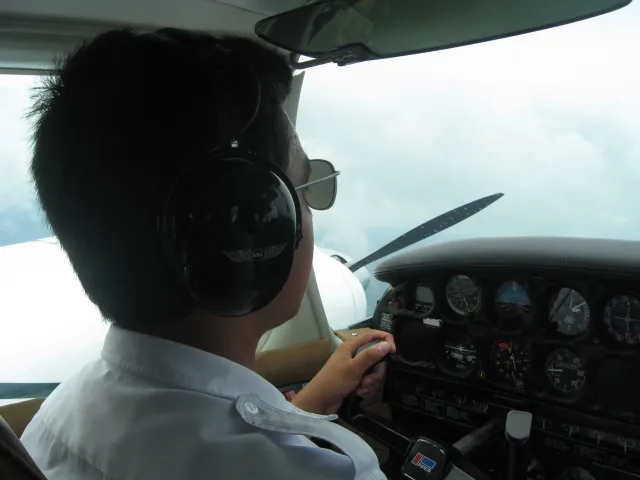
Photo: Avtraining1, CC BY-SA 3.0, via Wikimedia Commons
For much of aviation history, the phrase "simulator hours" carried an asterisk. Instructors valued them. Airlines relied on them. But among regulators, synthetic training environments occupied a gray zone — respected in practice, yet carefully bounded by policy. That relationship has been changing, and nowhere is the shift more consequential than in the domain of visual docking guidance system simulation.
Today, VDGS-based training platforms are not merely tolerated within FAA-approved curricula — they are increasingly cited as models of fidelity-driven instruction. Understanding how that credibility was earned, and what it means for professional pilots across the United States, requires a close look at both the regulatory machinery and the engineering achievements that drove the conversation forward.
A Policy Environment in Motion
The FAA's approach to simulation credit has evolved considerably since the passage of the Aviation Safety and Federal Aviation Administration Extension Act of 2010, which tightened oversight of airline training programs following a series of high-profile accidents. Initially, that scrutiny caused regulators to apply more conservative standards to any training conducted outside an actual aircraft. Simulation vendors responded not with lobbying but with precision — investing heavily in platform accuracy to meet and eventually exceed the FAA's Advanced Qualification Program (AQP) benchmarks.
Under AQP, carriers can substitute validated simulation hours for certain categories of line-oriented flight training, provided the simulator meets specific fidelity thresholds. VDGS platforms, which model the terminal approach environment with extraordinary geometric and environmental accuracy, have increasingly qualified under these provisions. Several major U.S. carriers have now received FAA approval to incorporate dedicated VDGS simulation modules into their AQP curricula, with credit applied toward type-rating currency requirements.
Regulatory specialists within the aviation community note that the FAA's National Simulator Program (NSP) — the body responsible for evaluating and qualifying flight training devices — has been particularly receptive to platforms that demonstrate measurable behavioral fidelity. That means the software must not only look realistic; it must produce pilot responses and decision patterns that mirror those observed in actual gate operations.
The Technology That Made Approval Possible
Early flight simulators earned skepticism in some regulatory quarters because their limitations were well understood. Frame rate inconsistencies, oversimplified aerodynamic models, and visual artifacts could produce training habits that failed to transfer cleanly to real-world operations. The generation of VDGS software now seeking and receiving FAA recognition has addressed those shortcomings systematically.
Modern platforms model wind gradient effects at the terminal gate level, account for aircraft weight distribution as fuel burns down during taxi, and replicate the visual cue degradation that occurs in low-visibility or precipitation conditions. The docking corridor geometry in current software is derived from actual airport surveys, meaning pilots training on a specific gate configuration at, say, Chicago O'Hare or Dallas/Fort Worth are practicing against data drawn directly from those environments.
Flight instructors who have integrated these tools into their training programs describe a measurable improvement in student performance during live evaluations. The consistency of the simulation environment — the ability to repeat identical approach scenarios dozens of times without the scheduling constraints of actual gate access — allows instructors to isolate and correct specific behavioral errors in a way that line training simply cannot accommodate.
What Regulators and Instructors Are Saying
Conversations with aviation training professionals reveal a nuanced but broadly optimistic consensus. Instructors at several Part 121 carriers note that the FAA's evaluators have become noticeably more engaged with simulation fidelity documentation over the past several years, requesting detailed validation data rather than simply reviewing software specifications.
The shift reflects a broader philosophical evolution within the agency. Rather than treating simulation as a compromise solution — a way to reduce training costs at the expense of rigor — the FAA appears to be developing a framework in which high-fidelity simulation is recognized as a distinct and valuable training modality with its own set of competencies and outcomes.
For VDGS-specific training, this is particularly significant. Docking a wide-body aircraft at a congested terminal gate involves a complex interplay of spatial awareness, instrument interpretation, and crew coordination that is genuinely difficult to practice in live operations without incurring real operational risk. Simulation removes that risk while preserving the cognitive and procedural demands of the task.
Cost Implications for U.S. Airlines
The financial dimension of this regulatory acceptance should not be understated. Type-rating training for a commercial pilot on a wide-body aircraft can exceed $50,000 when all associated costs are factored in. If VDGS simulation hours can be credited toward recurring proficiency checks — reducing the number of sessions requiring a full Level D full-flight simulator or actual aircraft time — the savings across a large fleet become substantial.
Some estimates within the industry suggest that carriers operating more than 200 aircraft could realize seven-figure annual savings once VDGS simulation is fully integrated into their AQP frameworks. Those figures have not gone unnoticed by airline finance departments, which has in turn accelerated internal advocacy for regulatory approval.
Looking Ahead
The trajectory is clear. As VDGS platforms continue to demonstrate behavioral fidelity through validated outcome data, the FAA's willingness to extend formal credit for simulation-based training will expand. Pilots entering the profession today should expect simulation to constitute a larger share of their certification pathway than it did for the generation that preceded them.
For aviation professionals and serious sim enthusiasts alike, the message from regulators is increasingly unambiguous: precision in the simulator is no longer a rehearsal for the real thing. In many respects, it has become the standard by which real-world performance is measured.