Inside the Engine Room: The Real-World Physics Powering Today's VDGS Simulation Software

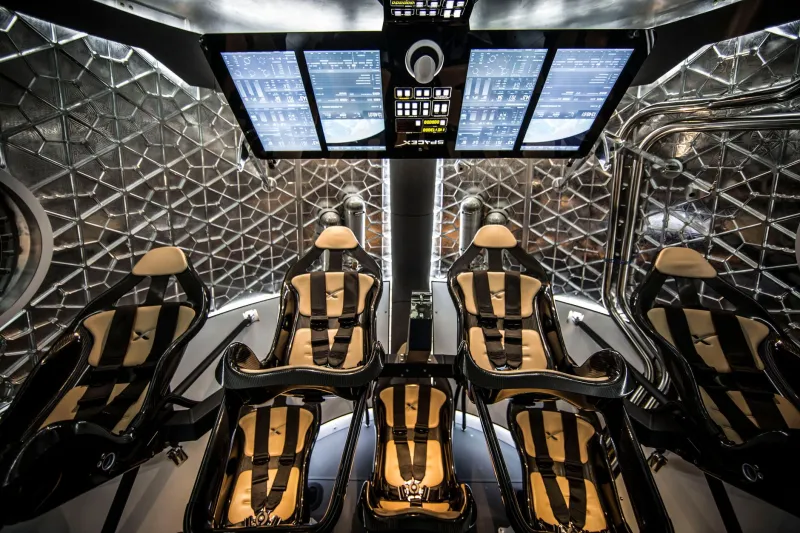
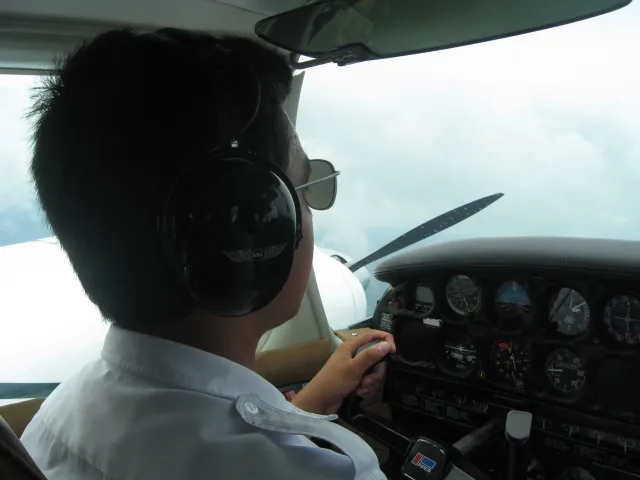
Photo: aircraft physics simulation software engineering visualization cockpit, via images.alphacoders.com
Pull up to a gate in a well-built VDGS simulation, and the experience feels immediate and tactile — the nose of the aircraft inching forward, guidance numbers counting down, the subtle resistance of inertia as you modulate thrust. What you are perceiving is not an approximation. It is the output of a physics engine that has been painstakingly calibrated against real-world aerodynamic and structural data. Understanding how that engine works — and why its accuracy is non-negotiable — is one of the more rewarding technical journeys an aviation enthusiast can undertake.
Why "Good Enough" Is Never Sufficient
There is a temptation, particularly among newcomers to flight simulation, to treat visual realism as the primary measure of a platform's quality. If the airport looks right and the aircraft model is detailed, the thinking goes, the experience is authentic. VDGS simulation dismantles that assumption quickly.
Docking guidance is a precision task. The tolerances involved — typically measured in fractions of a meter laterally and longitudinally — demand that every physical variable influencing aircraft behavior be modeled with fidelity. A simulation that renders a gate beautifully but misrepresents the inertial response of a fully loaded narrow-body aircraft is not merely inaccurate; it is actively counterproductive. Pilots who train on it will develop intuitions that do not transfer to actual operations, and enthusiasts who use it will be building habits against a false standard.
The best VDGS platforms begin with this constraint and engineer outward from it.
Modeling Aircraft Inertia: Mass, Fuel, and Load Distribution
An aircraft approaching a terminal gate is not a rigid object of fixed mass. It has consumed fuel during flight, which shifts its center of gravity. Its cargo may be unevenly distributed. Passenger seating configurations affect pitch attitude. All of these variables influence how the aircraft responds to thrust inputs and braking during the final meters of a docking approach.
High-fidelity VDGS software accounts for these factors through dynamic mass modeling. Rather than assigning a single fixed weight to an aircraft type, the physics engine maintains a real-time representation of mass distribution that updates as the simulation progresses. Users who configure a flight with a realistic fuel load and passenger manifest will observe a meaningfully different handling response than those who use default values — and that difference reflects actual aerodynamic and mechanical relationships, not arbitrary code.
For enthusiasts, this creates an opportunity to explore how professional pilots adapt their technique across different loading configurations. For training applications, it ensures that the procedural responses practiced in simulation are calibrated to the real operational variability pilots will encounter.
Wind Shear and the Terminal Environment
Wind behavior near airport terminals is among the most complex fluid dynamics challenges in applied aeronautics. Terminal structures, jet bridges, ground service equipment, and adjacent aircraft all create localized turbulence patterns that can affect an aircraft's lateral track and approach speed in the final moments before docking.
Early simulation platforms addressed this with simplified wind models — a uniform velocity and direction applied globally across the simulation environment. Modern VDGS engines take a fundamentally different approach, using computational fluid dynamics data derived from real terminal surveys to generate spatially variable wind fields. The result is that wind shear effects in the simulation are not random or generic; they correspond to the actual aerodynamic characteristics of specific gate environments.
This matters for enthusiasts because it transforms wind from a nuisance variable into a teachable element of the docking task. Users learn to anticipate the buffeting that occurs when crossing the shadow of a terminal jetway, to compensate for the lateral push generated by crosswinds funneling between adjacent concourses. These are skills that experienced ramp pilots develop over years of line operations. VDGS simulation compresses that learning curve significantly.
Gate Geometry: More Than a Visual Reference
The visual docking guidance system itself — the display that provides azimuth and stopping distance cues to the flight crew — is only as useful as the geometric model underlying it. In real-world operations, VDGS hardware is calibrated to the precise physical dimensions of each gate: the centerline offset, the stopping point relative to the jet bridge, the angular field of the guidance display.
Quality simulation software replicates this calibration process in the digital environment. Gate geometry data is sourced from actual airport surveys, often incorporating laser scan measurements of specific terminal configurations at major U.S. airports. When a user trains on Gate B14 at a specific hub, the lateral and longitudinal cue relationships they observe in the simulation match those they would encounter at the physical gate.
The engineering implication is significant. It means that the spatial reasoning skills developed in simulation — the ability to read guidance cues and translate them into precise control inputs — are directly transferable. There is no recalibration required when moving from the virtual environment to the real one.
Frame Rate, Latency, and Perceptual Fidelity
Physics accuracy is necessary but not sufficient for genuine simulation fidelity. The human perceptual system imposes its own requirements. Research in simulation science consistently demonstrates that latency between control input and visual response — measured in milliseconds — has a measurable effect on the motor learning that occurs during training. If the simulation responds to a thrust reduction 80 milliseconds after the input, the user's nervous system learns a timing relationship that does not exist in actual operations.
Leading VDGS platforms invest heavily in minimizing this latency, typically targeting end-to-end response times below 20 milliseconds. Achieving that threshold requires careful optimization of the physics engine, the rendering pipeline, and the hardware interface simultaneously. It is one of the less visible but most consequential engineering challenges in simulation development.
Why Accuracy Translates to Better Decisions
The ultimate argument for physics fidelity in VDGS simulation is not technical — it is behavioral. Decision-making under pressure draws on pattern recognition built through repeated exposure to realistic conditions. A pilot or enthusiast who has practiced hundreds of docking approaches against an accurate physics model has internalized a rich library of cause-and-effect relationships: how a crosswind gust affects lateral drift at a specific airspeed, how late braking on a wet surface changes the stopping profile, how an off-center load shifts the visual relationship between the aircraft nose and the guidance display.
That library is only as reliable as the physics that built it. Precision in the simulation is not an engineering indulgence. It is the foundation on which every useful training outcome rests.