Ghost in the Ramp: Diagnosing Why Your Simulation Engine Refuses to Acknowledge a Completed Pushback
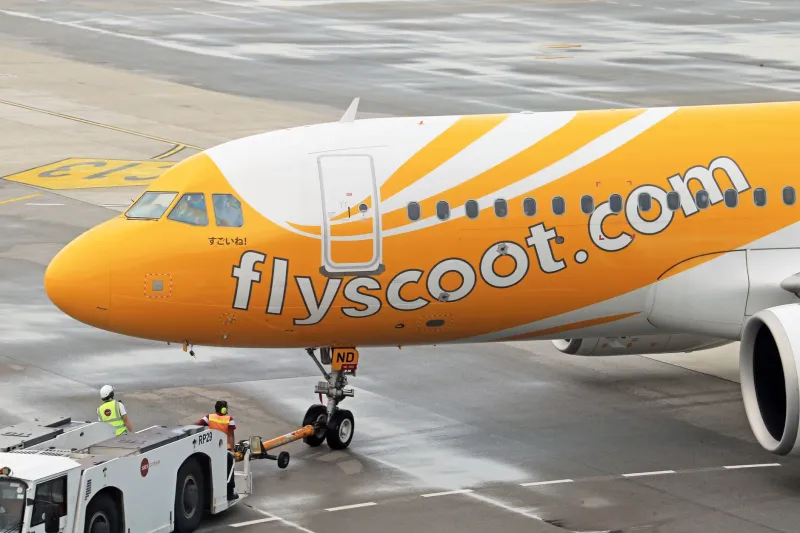
There is a particular frustration reserved for the moment when everything appears correct — the tug has disconnected, the ground crew has stepped clear, the headset operator has given the thumbs-up — and yet the simulation refuses to move on. Parking brake warnings persist. Door state flags remain active. The aircraft, by every internal measure the engine can produce, believes it is still sitting at the gate. The pushback, as far as your sim is concerned, never actually ended.
This failure mode is one of the more disorienting problems in gate operations simulation precisely because it is invisible. Nothing looks wrong. The visual representation of the pushback sequence completes normally. The tug model detaches and drives away. But underneath that surface presentation, the state handshake between the pushback system and the aircraft's operational logic has broken down entirely, leaving the simulation suspended in an ambiguous condition that neither side knows how to resolve.
Understanding the State Handshake Problem
To appreciate why this failure occurs, it helps to understand how modern flight simulation platforms manage the transition between docked and taxi-ready states. Rather than operating as a single continuous system, the process is divided across several discrete modules: the pushback controller, the aircraft systems manager, the ground service equipment layer, and — depending on your platform — a separate airport operations handler.
When a pushback sequence initiates, each of these modules registers a change in aircraft state. The parking brake is logged as conditionally released. Door interlock flags are monitored. The nose gear coupling is tracked as active. At the conclusion of the pushback, a completion signal is supposed to propagate back through this chain, allowing each module to update its records and release the aircraft into taxi mode.
The problem arises when that completion signal either fails to transmit, arrives out of sequence, or is interpreted inconsistently by one or more modules. The pushback controller may correctly register the sequence as finished while the aircraft systems manager — which operates on a slightly different update cycle — never receives confirmation. The result is a split state: the sim's visual layer shows a completed pushback, while the operational layer still believes the aircraft is coupled to a tug that no longer exists.
How Real-World Ramp Coordination Differs
In actual airport operations, the handoff between pushback crew and flight deck is governed by a structured verbal and visual protocol that leaves no ambiguity about when the tug has fully disengaged. The ground crew confirms disconnection of the tow bar, communicates the all-clear over headset, and physically removes themselves and their equipment from the aircraft's path before the flight deck acknowledges taxi clearance. There is a human verification layer at every step.
Current simulation implementations attempt to replicate this process procedurally, but they do so without the redundancy that human coordination provides. If the automated sequence encounters a timing conflict — a frame rate spike, a scenery load event, a plugin interrupt — the procedural handoff can stall or skip steps entirely. Unlike a real ground crew that would simply repeat the all-clear signal if the flight deck did not respond, the simulation has no recovery mechanism for a failed state transition. It simply holds the last confirmed state and waits.
This architectural gap between real-world ramp coordination and simulated procedure management is the root cause of most persistent post-pushback errors. The simulation is not broken in any traditional sense. It is operating exactly as designed — it simply lacks the adaptive verification that human crews provide automatically.
Identifying the Failure in Practice
Post-pushback state failures present in several consistent ways that experienced simmers will recognize. The most common is a parking brake conflict, where the aircraft refuses to release the brake or generates a persistent warning even after the brake handle has been cycled. This occurs because the systems manager is still holding a conditional brake-active flag that was set during pushback coupling and never received a release command.
A secondary presentation involves door state errors, particularly on aircraft models that include ground service interlock logic. If the pushback completion signal does not propagate correctly, the interlock system may continue to report that a ground connection is active, which in turn prevents certain door states from resolving. On some highly detailed aircraft models, this can cascade into hydraulic ground power flags and even fuel system warnings.
A third and less obvious presentation is a frozen heading indicator or a navigation system that refuses to enter taxi mode. Some aircraft models use the pushback completion event as a trigger for switching certain avionics from ground service to normal operation. If that trigger never fires, the systems remain in a holding configuration that can complicate the entire departure sequence.
Structured Diagnostic Approaches
Resolving a post-pushback state failure requires addressing the condition at the module level rather than simply retrying the visual sequence. Several practical approaches have proven effective across the major simulation platforms used by the US community.
The first and most reliable method is a controlled state reset through the aircraft's own systems menu rather than through the pushback interface. Accessing the aircraft's ground services panel directly and manually toggling the tow bar or ground connection flag forces the systems manager to re-evaluate the aircraft's current state independently of the pushback controller. On many aircraft models, this single action is sufficient to clear the split state and allow normal taxi operations to resume.
If a direct systems panel reset is unavailable, cycling the parking brake through a full engage-and-release sequence while simultaneously issuing a new taxi command can sometimes force the operational layer to re-query the pushback controller for a current status. This approach is less precise but has a reasonable success rate on platforms where the state conflict is primarily a timing issue rather than a module communication failure.
For persistent failures that neither of the above approaches resolves, repositioning the aircraft by a small distance — even two or three feet — using a manual slew or position adjustment tool is often effective. The act of changing the aircraft's registered coordinates forces every monitoring module to re-initialize its state from scratch, which effectively clears any residual pushback flags that have become stuck.
The Broader Implication for Gate Operations Realism
The phantom pushback problem is ultimately a symptom of a broader architectural challenge in simulation design: the difficulty of replicating a process that depends on human judgment and redundant verification using a purely procedural system. Pushback completion is not a single event in real-world operations — it is a negotiated confirmation between the flight deck and the ground crew, repeated until both parties are satisfied.
As simulation platforms continue to develop more sophisticated ground operations modeling, the expectation within the community should be that this verification layer becomes more robust. Until that point, understanding the underlying state logic — and knowing which diagnostic steps to apply when it fails — is an essential part of operating at the gate with any degree of consistency.
At VDG SimDock, mastering the gate means understanding not just the visual sequence of a departure, but the operational logic that governs every step of it. A pushback that looks complete is not always a pushback that is complete. Knowing the difference is what separates a simmer who reacts to failures from one who anticipates and resolves them.