Lateral Imbalance: The Fuel Distribution Flaw That's Quietly Wrecking Your Gate Approaches
There is a particular category of simulation error that never announces itself loudly. It does not produce a warning chime, trigger an EICAS message, or cause an obvious system failure. Instead, it accumulates quietly across the final miles of an approach, expressing itself as a persistent correction tendency, a slightly sluggish roll response, or a docking alignment that never quite feels locked in. That error is asymmetrical fuel loading — and it is arguably the most underexamined realism variable in the flight simulation community today.
At VDG SimDock, precision at the gate is the standard we hold ourselves to. Achieving that precision requires understanding not just the mechanics of the approach itself, but the physical state of the aircraft long before the runway threshold appears on the horizon.
Why Fuel Distribution Is a Weight-and-Balance Problem, Not Just a Range Problem
Among newer simmers, fuel is treated almost exclusively as a range variable. You load enough to complete the flight with legal reserves, perhaps add a contingency buffer, and move on. What this approach ignores is that fuel is also mass — distributed mass that occupies specific locations within the airframe and exerts measurable influence on the aircraft's lateral and longitudinal center of gravity.
On a typical commercial transport like the Boeing 737 or Airbus A320 family, fuel is carried in the center tank and in two wing tanks. Under ideal circumstances, wing tank quantities remain symmetrical throughout the flight. In practice, however, asymmetries develop. Fuel system crossfeed configurations, engine-specific burn rates, manual transfer errors, or simply failing to monitor balance during cruise can all produce a condition where one wing carries meaningfully more fuel than the other by the time the aircraft begins its descent.
This lateral center-of-gravity shift — even a modest one — introduces a persistent rolling moment that flight control systems and autopilot modes must continuously counteract. On approach, with configuration changes occurring rapidly and autopilot authority diminishing, that corrective demand falls increasingly on the pilot. The result is an approach that requires constant, low-level aileron input to maintain wings-level flight, a condition that compounds workload precisely when workload should be decreasing toward a stable gate arrival.
What Real Airline Crews Do Before Descent
Professional crews operating under Part 121 regulations in the United States do not treat fuel balance as an afterthought. Standard operating procedures at major carriers — including those operating the Airbus A321 and Boeing 757 fleets across transcontinental routes — include explicit fuel balance checks during the descent checklist. The FAA's guidance on weight and balance, formalized through Advisory Circular 120-27, underscores the legal and operational significance of maintaining the aircraft within certified center-of-gravity limits throughout all phases of flight, not merely at departure.
When an imbalance is detected, crews have options: crossfeed from the heavy wing's tank to the operating engine on the opposite side, or in some aircraft, initiate a fuel transfer. The objective is to arrive at the gate with tanks as symmetrical as practical, minimizing control compensation requirements during the most demanding phase of the flight.
The nuance here is critical. It is not simply about staying within limits on paper. It is about arriving at the gate approach in a configuration that allows the aircraft to respond predictably, track the localizer cleanly, and transition to visual maneuvering without introducing asymmetric handling characteristics that compromise alignment precision.
How Simulation Platforms Model — and Misrepresent — This Variable
The degree to which popular flight simulation platforms model fuel asymmetry varies considerably, and understanding those differences is essential for simmers pursuing high-fidelity gate operations.
Microsoft Flight Simulator (2020/2024) with default aircraft provides basic fuel distribution modeling, but the default behavior tends to equalize burn rates between wing tanks in ways that do not accurately reflect real-world fuel system logic. Third-party aircraft from developers such as PMDG, Fenix Simulations, and Aerosoft introduce substantially more sophisticated fuel system modeling. The Fenix A320, for example, replicates Airbus fuel management logic with considerable accuracy, including center-of-gravity computation that updates dynamically as fuel burns.
X-Plane 12 benefits from its blade element aerodynamic model, which means that mass distribution — including fuel — has a more direct and physically grounded influence on flight dynamics than in platforms using lookup-table aerodynamics. Simmers using X-Plane with aircraft such as the Toliss A321 or the IXEG 737 Classic will notice that intentionally creating a fuel imbalance produces tangible handling differences during approach, particularly in crosswind conditions where roll correction demands are already elevated.
Prepar3D users operating high-fidelity PMDG aircraft have long had access to detailed fuel system modeling, and the platform's legacy among professional training simulator users means its weight-and-balance calculations are taken seriously within that community.
Configuring for Realism: A Practical Framework
For simmers who want to integrate fuel distribution into their gate approach workflow, the following approach is recommended.
First, establish your fuel load using a realistic planning tool. Applications such as SimBrief generate weight-and-balance data that mirrors actual airline dispatch practice, including ZFW (zero fuel weight), TOW (takeoff weight), and planned fuel burn by phase. Load these values into your aircraft's fuel and payload manager before departure.
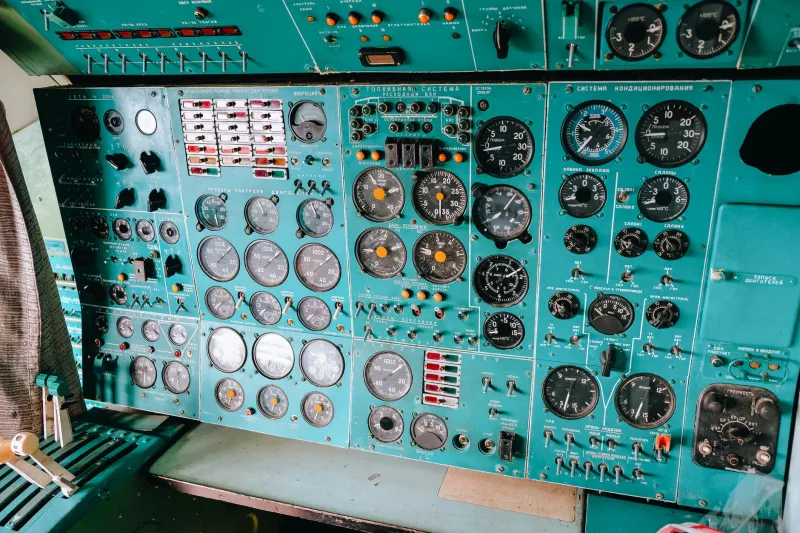
Second, monitor tank balance at cruise altitude. In aircraft with proper fuel system modeling, observe whether the wing tanks are burning symmetrically. If your platform supports it, engage the fuel balance page or equivalent synoptic display and note any developing asymmetry.
Third — and this is the step most simmers skip entirely — perform a fuel balance correction before top of descent. If an imbalance exists, initiate crossfeed or transfer procedures appropriate to your aircraft type. Consult the aircraft's FCOM or the developer's documentation for the correct procedure; applying the wrong crossfeed logic can worsen the imbalance.
Finally, brief the approach with the corrected balance in mind. Note your current lateral CG position and anticipate any residual handling tendency. During the approach itself, resist the urge to over-correct; instead, recognize asymmetric handling cues early and make deliberate, measured inputs.
The Gate Arrival Standard
At VDG SimDock, the gate is not merely a destination — it is a performance benchmark. Arriving at the gate with a stable, predictable aircraft configuration is the product of decisions made hours earlier, not just in the final seconds before the nose wheel crosses the hold-short line.
Fuel distribution is one of the most consequential of those earlier decisions, and it remains one of the least appreciated realism levers available to the serious simmer. The pilots who master this variable do not simply land more accurately. They arrive at the gate in command of an aircraft that behaves exactly as they expect — and that command, earned through disciplined systems management, is what separates competent simulation from genuinely professional-grade gate operations.
The fuel was always doing something. The question is whether you were paying attention.