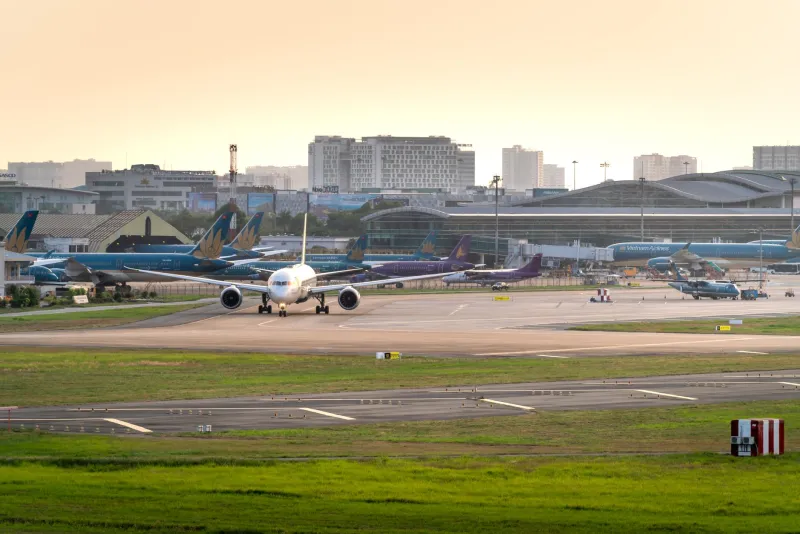
Hemmed In: Surviving the Spatial Chaos of Dense Gate Clusters at America's Busiest Hub Airports
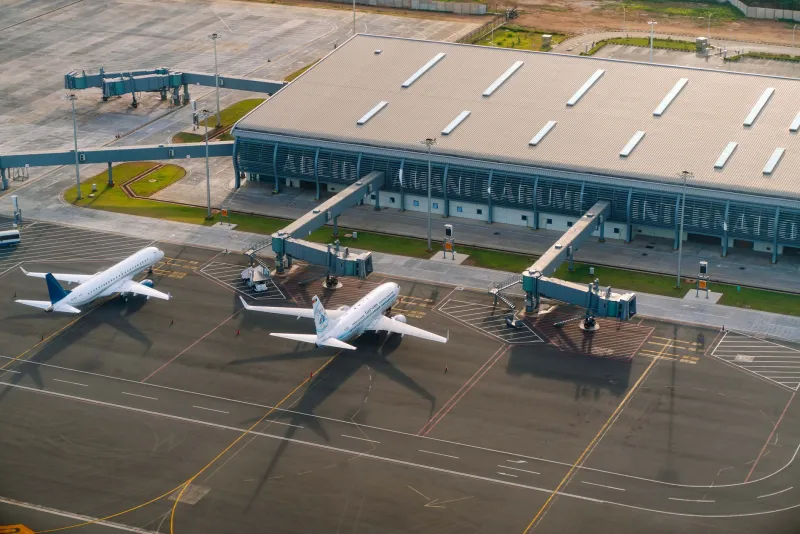
There is a particular kind of confidence that builds after you've nailed a dozen clean approaches on an isolated gate. The centerline holds, the docking guidance system ticks down smoothly, and the nose stops exactly where it should. That confidence, however useful on an open apron, can become a liability the moment you pull into Concourse T at Atlanta Hartsfield-Jackson or the F gates at O'Hare. In those environments, the rules change — and simmers who don't adjust their technique accordingly will find that a perfect approach is no guarantee of a clean dock.
Dense gate clusters introduce a category of challenge that isolated runway and single-gate scenarios simply cannot replicate. When adjacent aircraft are parked within twenty to thirty feet of your wingtip, when visual reference points are obscured by neighboring jetways, and when the psychological weight of a near-miss sits at the edge of every correction you make, the simulation demands something more than procedural familiarity. It demands spatial intelligence.
Why Congested Terminals Break Standard Technique
Most foundational docking guidance in flight simulation is built around the assumption of reasonable lateral clearance. The visual cues that experienced simmers rely upon — painted centerlines, VDGS (Visual Docking Guidance System) units, and terminal wall geometry — remain legible when there is nothing competing for your attention on either side. Introduce a Boeing 737 parked at the adjacent gate, add a regional jet on your left, and suddenly those same reference points are partially blocked, visually compressed, or misleading.
The core issue is what aviation professionals call reference frame contamination. Your brain is attempting to triangulate position using multiple environmental cues simultaneously, and in a cluttered gate cluster, several of those cues are providing conflicting information. The nose of the adjacent aircraft can create a false sense of alignment. The angle of a neighboring jetway can subtly distort your perceived heading. Simmers who have not trained specifically for this environment will overcorrect — often repeatedly — producing the kind of wandering final approach that ends in either a ground stop or, worse, simulated contact.
Reading the Layout: ATL, ORD, and DFW as Case Studies
Understanding the physical architecture of America's most congested hubs is the first step toward managing them effectively.
Atlanta Hartsfield-Jackson (ATL) operates on a parallel concourse model, with aircraft on opposing gates separated by a relatively narrow interior taxiway. The density of operations at ATL means that at peak hours, nearly every gate in a given concourse is occupied simultaneously. Simmers working ATL add-on packages should pay particular attention to the T and E concourses, where gate spacing is especially tight and the angle of approach leaves very little margin for lateral drift.
Chicago O'Hare (ORD) presents a different kind of complexity. Its terminal layout features a mix of curved and angular concourses, meaning that the approach heading to one gate may be subtly different from the gate immediately beside it. This inconsistency is disorienting. Simmers accustomed to parallel-gate environments often apply corrections that were appropriate at the previous gate but are wrong for the current one. Building a mental map of each concourse's geometry before beginning operations is not optional at ORD — it is a prerequisite.
Dallas/Fort Worth (DFW) introduces the additional variable of semi-circular terminal layouts. The curved gate arrangements at Terminal D, for example, mean that simmers must constantly re-evaluate their alignment as the approach progresses. A heading that feels correct at fifty feet may be pulling you off-center by the time you reach the stopping mark.
Line-of-Sight Management in Tight Quarters
When adjacent aircraft obstruct your standard visual references, you must establish secondary reference points before the approach begins — not during it. On the ground, this means taking a deliberate pause after receiving gate assignment to identify what you can actually see from the cockpit at the expected docking distance.
Effective secondary references in cluttered environments include terminal wall features (windows, signage, structural columns), the VDGS unit itself when it becomes visible, and the geometry of the jetway arm relative to the terminal building. What you want to avoid is anchoring your approach to the aircraft parked beside you. That aircraft is not a fixed structure — it may have moved, may be positioned slightly off its own centerline, or may simply be a poor reference due to its angle relative to your gate.
If your simulator supports a ground crew or wing-walker function, this is precisely the scenario where that resource earns its place. A wing-walker stationed on the tighter wingtip side provides real-time clearance confirmation that no cockpit camera angle can replicate.
Differential Thrust: A Precision Tool for Narrow Corridors
In open-apron situations, most simmers rely on symmetric thrust reduction to manage speed on final approach. In congested gate clusters, differential thrust — applying marginally more or less power to one engine than the other — becomes a far more valuable instrument for making small heading corrections without introducing the kind of abrupt yaw that ripples through the entire approach sequence.
The technique requires practice and restraint. The goal is not to steer the aircraft with thrust the way you might in a ground handling scenario, but rather to make micro-corrections that hold an already-established centerline without requiring rudder input that could destabilize your track. In tight clusters, even a two- or three-degree heading deviation can translate to significant lateral displacement by the time you reach gate proximity. Small differential inputs, applied early and smoothly, prevent that deviation from compounding.
The Psychological Dimension
No honest guide to dense gate operations can ignore the cognitive pressure that proximity creates. Knowing that an occupied aircraft sits fifteen feet off your right wingtip does something to decision-making that open-apron approaches do not. The temptation to over-monitor the threat — to fixate on the adjacent aircraft rather than your own centerline — is one of the most consistent errors that simmers report when transitioning to high-density terminal environments.
The corrective discipline here is deliberate attention management. Before initiating the final approach segment, consciously assign your scan priorities: primary centerline reference first, VDGS second, peripheral clearance third. Do not invert that order regardless of how close the adjacent aircraft appears. The moment your primary attention shifts to the threat rather than the target, your approach geometry begins to degrade.
Experienced simmers often describe this as the difference between awareness and fixation. You need to know the adjacent aircraft is there. You do not need to watch it.
Building a Cluster-Ready Pre-Approach Routine
The most reliable way to perform consistently in congested terminal environments is to establish a gate-specific briefing habit before every approach. This should include a review of the gate's position within the cluster, identification of primary and secondary visual references, confirmation of adjacent gate occupancy status, and a mental rehearsal of the differential thrust corrections most likely to be needed given the gate's orientation.
This briefing does not need to be lengthy. Two to three minutes of deliberate preparation before you begin taxiing toward the gate is sufficient to reframe your mental model from open-apron mode to cluster mode. The transition is not automatic — it has to be chosen.
America's busiest hubs are not simply scaled-up versions of regional airports. They are categorically different operational environments, and the gate cluster is where that difference is most acutely felt. Master the cluster, and you will find that the isolated gates you practiced on begin to feel almost leisurely by comparison.