Beyond the Jetway: A Complete Operator's Guide to Realistic Gate Turnaround Procedures
For many flight simulation enthusiasts, the gate is a destination. You grease the landing, follow the centerline to your assigned stand, set the parking brake, and consider the flight complete. That perspective, while understandable, bypasses one of commercial aviation's most choreographed and operationally demanding phases. The turnaround — the interval between an aircraft going to blocks-in and receiving pushback clearance for the next departure — involves dozens of coordinated activities happening in parallel, each with its own timing constraints and failure modes. Mastering this phase in simulation transforms the gate from a finishing line into a dynamic operational hub.
Why Ground Operations Deserve Your Attention
US airlines operate on razor-thin on-time performance margins. A 45-minute domestic turnaround at a hub like Atlanta Hartsfield (KATL) or Denver International (KDEN) requires that ground crews, catering vendors, fuelers, baggage handlers, and cabin cleaning teams all begin and complete their tasks within a tightly sequenced window. A single delayed step — a fuel truck that arrives late, a catering cart that cannot clear the aircraft before boarding begins — cascades into a departure delay that ripples through the airline's entire schedule.
Simulation platforms that model ground operations, such as GSX Pro in the Microsoft Flight Simulator ecosystem or equivalent tools in X-Plane, recreate this complexity with impressive fidelity. But the software's potential is largely wasted if the operator — you — does not understand the underlying logic of what a realistic turnaround looks like. This guide provides that framework.
Phase One: Blocks-In and Immediate Post-Arrival Actions
The moment your main gear crosses the stop bar at your assigned stand, a clock starts. In the real world, the blocks-in time is recorded by ground crew and relayed to dispatch; it initiates the turnaround countdown. In simulation, treat this moment with equivalent formality.
Your first actions after setting the parking brake should mirror standard airline procedure:
- Fasten Seat Belt Sign OFF — signals to cabin crew that deplaning may begin
- Engines to idle or shutdown — depending on gate power availability and airline SOPs
- APU start — if ground power is not immediately connected, the APU maintains electrical and pneumatic supply
- Jetway or airstairs request — in ground operations add-ons, this is typically your first ground service call
Do not rush through these steps. The discipline of executing them in sequence, rather than jumping immediately to the pushback menu, is what separates a procedurally accurate turnaround from a perfunctory gate stop.
Phase Two: Parallel Ground Service Coordination
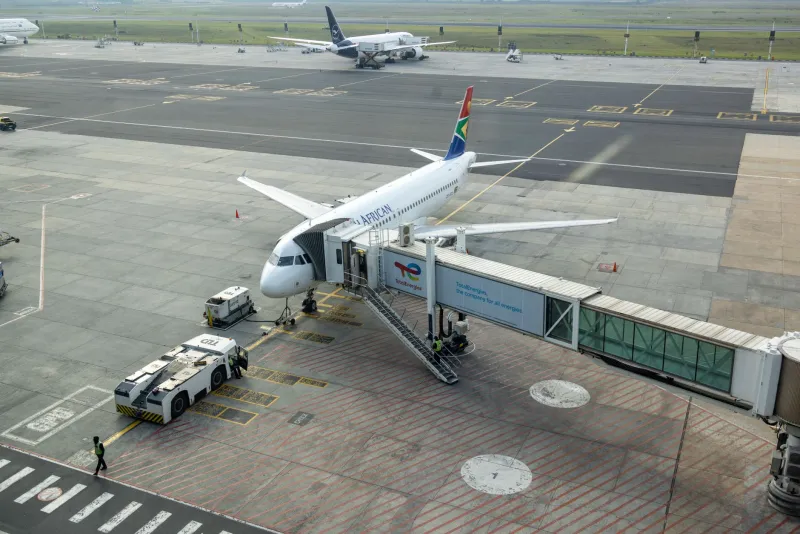
Once the jetway is connected and deplaning is underway, ground services begin their parallel tracks. This is where turnaround management becomes genuinely complex, because multiple teams must operate around the aircraft simultaneously without interfering with one another.
Fueling is typically one of the first services to begin, as it is often the longest single task in the turnaround. The fuel order, calculated by dispatch based on the upcoming flight plan, must be communicated to the fueling crew. In simulation, this means loading your fuel figures accurately before calling for the fuel truck. Overfueling wastes time and affects weight and balance; underfueling is operationally unacceptable. Review your planned fuel load against the next leg's distance, alternate requirements, and reserves before the truck connects.
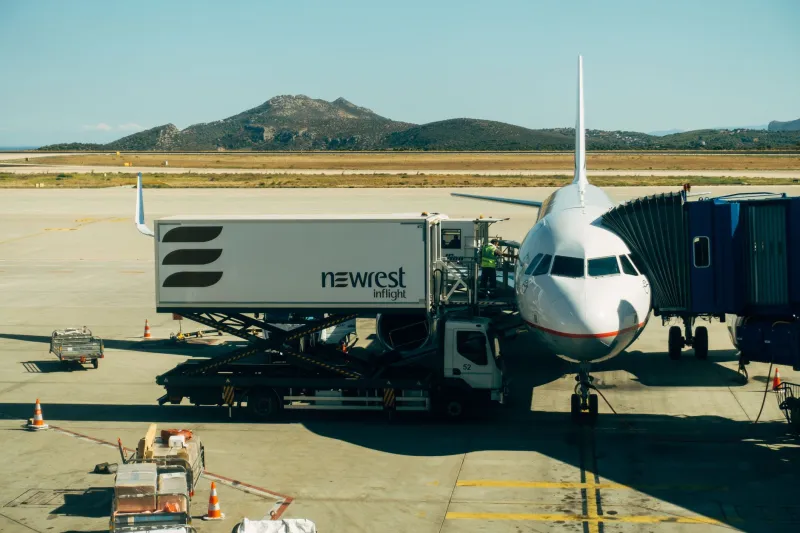
Catering presents a coordination challenge because catering trucks typically need access to the forward and aft service doors — the same zones where ground power cables and water service connections may be routed. At congested gates, the physical geometry of vehicle placement matters. Many simulation ground operations tools model this spatial logic, and positioning conflicts will delay service completion if you have not thought through the sequencing.
Cabin cleaning crews board immediately after passenger deplaning is complete. This team's completion is a prerequisite for boarding, which means any delay in their access — caused, for instance, by a catering truck that has not yet cleared the forward door — directly delays your departure.
Phase Three: De-Ice Procedures and Cold Weather Considerations
For departures during winter months or at high-elevation airports — think Denver in January or Minneapolis-Saint Paul (KMSP) in February — de-icing is not optional, and it is not quick. Understanding where de-icing fits in the turnaround sequence is essential for realistic operations.
De-icing is generally performed as close to the departure time as possible to maximize the holdover time provided by the de-icing fluid. This means it typically occurs after fueling and boarding are complete, during the taxi phase or at a dedicated de-ice pad. However, at some airports, gate de-icing is performed when pad capacity is limited.
In simulation, if your platform models de-icing fluid holdover times, pay attention to the type of fluid applied. Type I fluid (orange) has a short holdover time — sometimes as little as five to fifteen minutes in active precipitation. Type IV fluid (green) provides significantly longer protection. Departing outside the holdover window without a re-inspection is a procedural violation with real-world consequences; in high-fidelity simulation, it should be treated with the same seriousness.
Phase Four: Pushback Sequencing and Departure Readiness
The pushback is not simply a matter of calling ground control and releasing the parking brake. A proper pushback sequence involves several confirmational steps that, when executed correctly, reflect genuine airline discipline.
Before requesting pushback clearance:
- Confirm all doors are closed and armed — this is verified by the cabin crew and relayed to the flight deck
- Confirm fueling is complete and fuel caps are secure — a visual confirmation from the ground crew
- Verify weight and balance is finalized — final passenger and cargo counts affect your takeoff performance calculations
- Obtain ATIS and departure clearance — do not request pushback until you have a valid clearance in hand
- Coordinate pushback direction with ground crew — specify whether the tail swings left or right based on adjacent traffic and taxiway geometry
The pushback itself should be unhurried and deliberate. Rushing the tug operator in simulation, as in real life, risks wingtip conflicts with adjacent aircraft or ground equipment.
Building Your Personal Turnaround Checklist
The most effective way to internalize these procedures is to build a personal turnaround checklist tailored to the aircraft type and airline operation you simulate most frequently. A generic template might include the following phases: Blocks-In Actions, Ground Services Initiation, Fuel Confirmation, Catering Clearance, Cabin Crew Ready Report, De-Ice Assessment, Boarding Complete Confirmation, Door Closure and Arming, and Pushback Request.
Refine this checklist over multiple flights. You will discover that certain steps consistently cause delays — perhaps because you are calling for the fuel truck too late, or because you are requesting pushback before receiving your departure clearance. Each iteration brings your simulated operation closer to the operational tempo of a real airline ground team.
The Gate as a Proving Ground
At VDG SimDock, we believe that mastery of the gate environment is as demanding and rewarding as mastery of the approach corridor. The precision required to coordinate a realistic turnaround — the timing, the sequencing, the attention to procedural detail — reflects the same discipline that produces a stabilized approach and a smooth touchdown. When your gate operations run with the efficiency of a well-rehearsed ground crew, the entire simulation experience deepens in ways that no additional scenery package or weather add-on can replicate. Own the gate, and you own the operation.