The Clock Is Always Running: Why Gate Occupancy Time Deserves a Place in Your Simulation Priorities
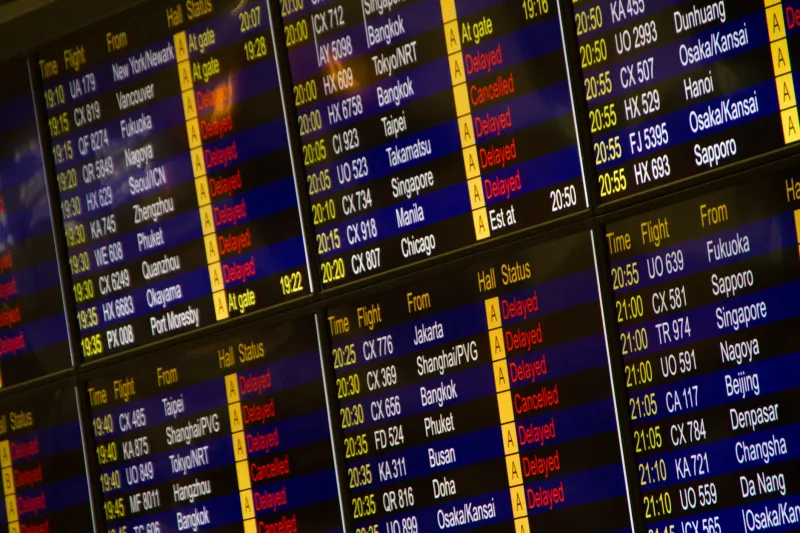
Open any post-flight debrief thread on a serious flight simulation forum and you will find detailed analysis of approach stability, instrument scan technique, crosswind correction, and fuel management. What you will rarely find is a discussion of how long the aircraft sat at the gate and whether that duration reflected operational reality.
This is a meaningful gap. Gate occupancy time—the interval between aircraft arrival at the stand and departure pushback—is one of the most consequential variables in commercial airline economics. It is also, in most simulation environments, treated as operationally neutral: a waiting period between the interesting parts of the flight. That treatment is both inaccurate and, for simmers who aspire to genuine procedural fidelity, worth reconsidering.
What Gate Time Actually Costs in the Real World
The financial exposure created by extended gate holds is not abstract. Airlines operating at major US hub airports pay for gate access through lease agreements that are typically structured around turn time assumptions. When an aircraft occupies a gate beyond its scheduled departure window, it does not simply delay itself—it initiates a cascade of downstream costs that compound with each passing minute.
Consider the primary cost categories:
Auxiliary Power Unit (APU) fuel burn: An aircraft sitting at the gate with its APU running consumes fuel at a rate that varies by aircraft type but typically falls between 100 and 250 pounds per hour. On a narrow-body aircraft like a Boeing 737, an unnecessary 30-minute gate extension can add 75 to 125 pounds of fuel burn before the aircraft ever moves. Multiplied across hundreds of daily departures at a hub like Hartsfield-Jackson Atlanta or Dallas/Fort Worth, the aggregate cost is substantial.
Crew duty time consumption: Flight crew are compensated under duty time rules governed by FAA regulations, specifically FAR Part 117. Every minute spent waiting at the gate consumes duty time that cannot be recovered. An extended hold that pushes a crew close to their duty limit may trigger a crew swap, which introduces delay, hotel costs, and scheduling complexity for subsequent flights operated by the same crew pairing.
Gate lease and usage fees: At major US airports, gate access fees are structured around scheduled block times. Overrunning those windows—particularly at congested hubs where gates are shared across multiple turns per day—can result in penalty fees assessed by the airport operator. At airports with limited gate inventory, an overrun also directly displaces the next scheduled arrival, creating a conflict that ground operations must resolve in real time.
Downstream delay propagation: Perhaps the most significant cost is the one least visible at the gate level. A departure that leaves 45 minutes late arrives late at its destination. If that aircraft is scheduled for an immediate turn, the late arrival compresses or eliminates the turnaround window. Ground crews are rushed. Catering may miss the aircraft. The next departure is delayed. That delay propagates forward through the aircraft's entire day of flying—a phenomenon the industry refers to as delay propagation or schedule recovery debt.
Why Simmers Underweight This Variable
The reasons that gate occupancy time receives so little attention in simulation communities are understandable, if not entirely defensible.
First, most simulation platforms do not impose financial consequences. There is no in-game penalty for a 90-minute gate hold. No dispatcher calls to ask why the aircraft has not pushed back. No operations control center flags the flight as a delay contributor. The absence of consequences creates the absence of urgency.
Second, the gate is frequently treated as a preparation zone rather than an operational environment. Simmers focus on loading fuel, configuring the FMS, and completing checklists—all legitimate activities—without accounting for whether the time consumed by those activities is realistic relative to actual airline turnaround standards.
Third, the visual and procedural richness of gate operations in modern simulation add-ons has, paradoxically, made extended gate time feel more acceptable. When there is a detailed animated ground crew to watch, a realistic jetway sequence to observe, and a comprehensive systems setup to complete, the gate feels productive. The clock, however, does not share that perception.
Real Turnaround Benchmarks as Simulation Design Parameters
For simmers who want to incorporate genuine operational pressure into their gate workflows, real-world turnaround benchmarks provide a practical framework.
US domestic narrow-body operations—the Boeing 737 and Airbus A320 family—are typically planned for turnaround windows of 35 to 45 minutes at major hubs. This window encompasses aircraft arrival, passenger deplaning, cabin cleaning and resetting, catering service, fueling, passenger boarding, and pushback. At Southwest Airlines, which has built its entire network economics around rapid turns, the target is frequently 25 minutes at secondary airports.
Wide-body international operations carry longer planned windows—typically 90 to 120 minutes for aircraft like the Boeing 777 or 787—but those windows are also subject to tighter scrutiny because the downstream cost of a delayed wide-body departure on a transatlantic or transpacific route is proportionally larger.
For simulation purposes, these benchmarks translate into a design challenge: can you complete your gate departure preparation within the scheduled turnaround window? If you routinely take 75 minutes to set up a narrow-body for a domestic departure, you are modeling a flight operation that would be flagged as a chronic delay contributor in any real airline operations control environment.
Designing Scenarios That Impose Operational Pressure
The most effective way to internalize the weight of gate occupancy time is to design simulation scenarios that impose consequences for overrunning it.
Several approaches are worth considering:
Scheduled departure time discipline: Before beginning your gate setup, note your scheduled departure time and treat it as a hard constraint rather than a guideline. Track the delta between your actual pushback time and your scheduled departure. Over multiple sessions, this simple metric will surface patterns in your gate workflow that are costing simulated time.
Crew duty time modeling: If your simulation environment supports crew scheduling or dispatch integration, configure your crew with realistic duty time windows and observe how gate overruns affect their available flying time for subsequent legs.
Multi-leg day-of-operations planning: Rather than simulating individual point-to-point flights, plan a full aircraft day—three or four turns on a realistic domestic schedule. The cumulative effect of gate overruns becomes immediately apparent when a 20-minute delay on the first leg has propagated into a 75-minute delay by the fourth departure.
Gate conflict scenarios: At busy hub airports, simulate a scenario where your gate is needed by an inbound flight 10 minutes after your scheduled pushback. The pressure of a hard gate-return deadline changes the character of the turnaround entirely.
The Operational Authenticity Argument
Flight simulation at the serious level is, at its core, an exercise in procedural fidelity. We invest in accurate aircraft systems models, realistic weather environments, and authentic ATC communication protocols because we want the simulation to reflect the real operational environment as closely as possible.
Gate occupancy time is part of that environment. It is not a background variable—it is a primary operational pressure that shapes every decision made by ground crews, dispatchers, and flight crews at every major US airport, every day. Treating it as neutral is a modeling choice, and it is one that costs something in terms of authenticity.
At VDG SimDock, our position is straightforward: if you are serious about gate operations, the clock matters. Not because a simulation timer will penalize you, but because internalizing the real cost of gate time is what separates procedural simulation from genuine operational understanding. The gate is not a lobby. It is where airline economics are won and lost, one minute at a time.