Grounded at the Gate: A Systematic Diagnosis for Aircraft That Refuse to Move
There is a particular kind of frustration that only flight simmers understand: you have filed your flight plan, completed your pre-departure checklist, contacted ground control, and confirmed your pushback clearance—and yet the aircraft sits motionless. No error message, no obvious failure, no indication of what went wrong. The gate has become a trap.
At VDG SimDock, we treat gate operations as the foundation of authentic flight simulation. That means confronting the unglamorous reality that pushback failures are not rare edge cases. They are systematic, repeatable events with identifiable causes. This guide will walk you through the most common scenarios that produce an immobilized aircraft, how to diagnose each one, and what preventative measures reduce the likelihood of encountering them in the first place.
Understanding Why Pushback Fails Before It Begins
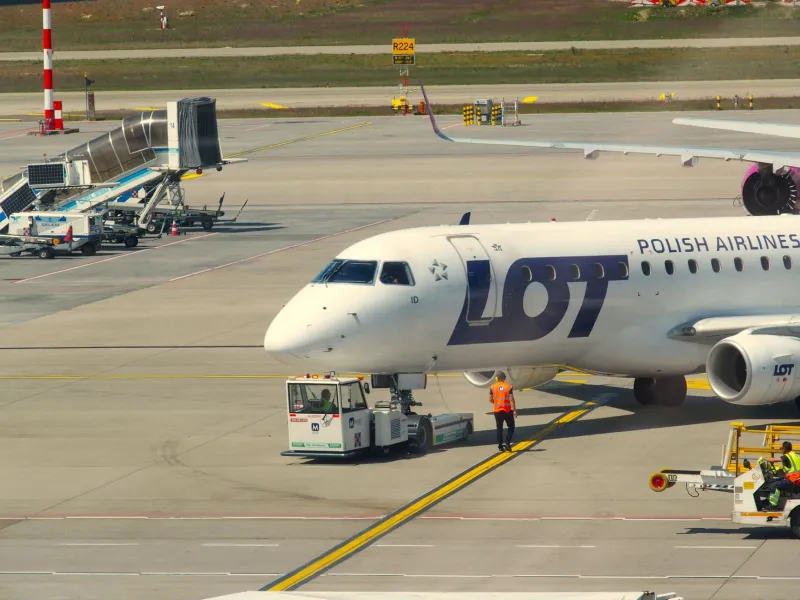
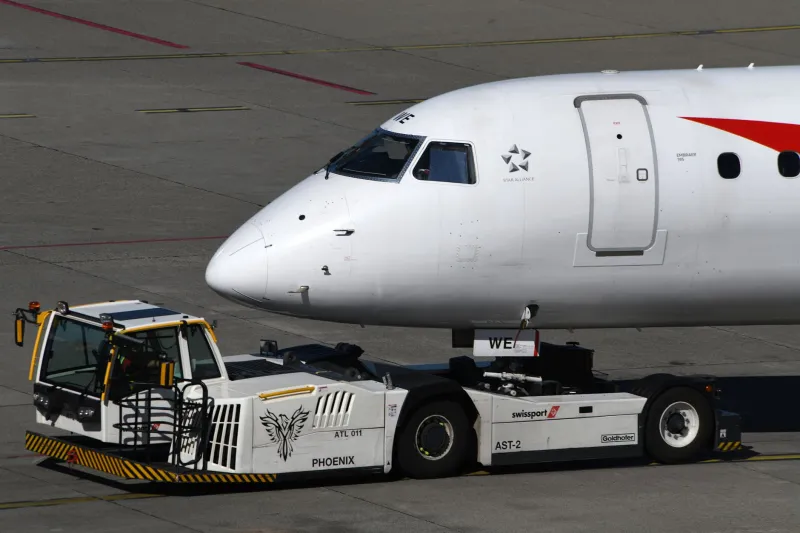
The pushback sequence is not a single event—it is a chain of dependent handoffs. Ground control must issue a clearance. The virtual ground crew must receive and acknowledge it. The tug must be assigned, staged, and connected. The aircraft must be in a position that permits rearward movement without conflicting with adjacent stands, structures, or taxiway geometry.
When any link in that chain breaks silently, the aircraft does not move. The simulation does not always surface the failure explicitly, which is why pilots—even experienced ones—often waste significant time troubleshooting the wrong variable.
The first discipline is resisting the impulse to immediately retry the pushback request. Repeating a failed command rarely resolves the underlying condition. Instead, work the problem from the top of the chain downward.
Communication Breakdown: When Ground Never Really Heard You
The most common and least obvious cause of a failed pushback is a communication handoff that appeared to succeed but did not register within the simulation's operational logic. This occurs most frequently in add-on ATC environments where frequency management is handled through layered software.
Verify the following before assuming a mechanical failure:
- Active frequency confirmation: Confirm that you are transmitting on the correct ground control frequency for your specific terminal. At large hub airports—Chicago O'Hare, Dallas/Fort Worth, Los Angeles International—ground frequencies are often split by concourse or movement area. Being on the wrong frequency produces a clearance response that is cosmetically correct but operationally disconnected from the gate assignment system.
- Readback integrity: Some simulation environments require a complete and accurate readback before the clearance is considered active. A partial readback or a menu-selected shortcut response may not satisfy the internal trigger.
- Handoff sequencing: If you contacted ground before receiving your IFR release or departure clearance from delivery, certain add-ons will suppress the pushback authorization even if ground verbally acknowledges your request.
If communication appears intact and the aircraft still will not move, the problem lies downstream.
Parking Position Conflicts: The Geometry Problem You Cannot See
Pushback paths are not infinite. Every parking stand has an associated departure vector—a predetermined arc or straight-line path that the simulation uses to calculate whether rearward movement is geometrically possible given the current state of adjacent stands and taxiway occupancy.
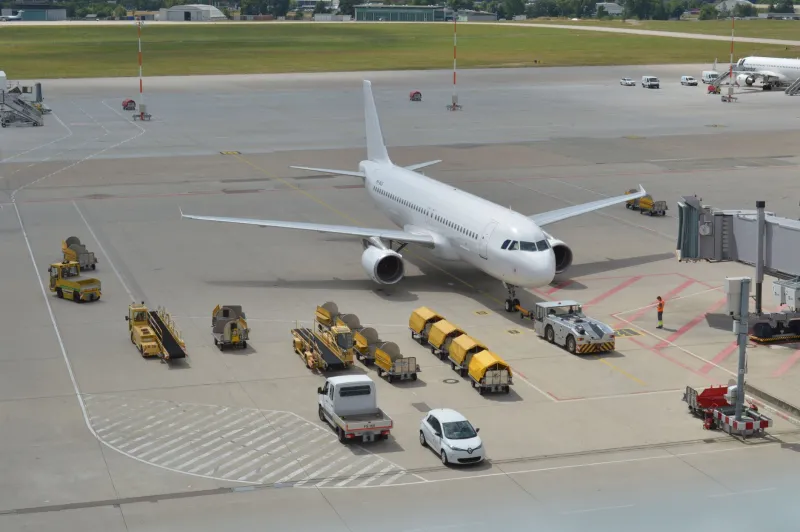
A parking position conflict occurs when that calculated path is blocked. The blocking object may be another aircraft at a neighboring gate, a ground service vehicle that has not been cleared from the movement area, or—in airports with tight apron geometry—a static scenery element that was placed incorrectly in the add-on's data.
Diagnostic steps for this scenario:
- Zoom out to the overhead view. Examine the immediate ramp environment. Look for any object within approximately 50 feet of your intended pushback arc. Even objects that appear visually clear may register as obstructions within the collision geometry used by the pushback engine.
- Check adjacent gate occupancy. If a neighboring stand is occupied by an AI aircraft that has not completed its own arrival sequence, the gate may be flagged as blocked at the data level even if there is apparent physical clearance.
- Review your parking stand assignment. Confirm that the stand you are occupying is designated for your aircraft category. An aircraft parked at a stand coded for a smaller category may have a pushback path that the system considers invalid for your aircraft's wingspan or length.
Weight and Balance Flags That Block Departure Authorization
This category of failure is less common in casual simulation environments but becomes significant in platforms that model dispatch logic and load sheet approval. When weight-and-balance parameters fall outside acceptable limits, certain simulation systems will suppress pushback authorization as part of an automated departure gate check.
Specific conditions to audit:
- Fuel load asymmetry: An imbalanced fuel state—where one wing tank deviates significantly from the other—can trigger a lateral balance flag that prevents departure authorization. This is covered in greater depth in our earlier analysis of fuel distribution errors, but the operational consequence here is a pushback that never initiates.
- Center of gravity exceedance: If your simulated load sheet places the aircraft's center of gravity outside the approved envelope for departure, dispatch-aware add-ons will hold the aircraft at the gate until the condition is corrected.
- Cargo hold configuration errors: In wide-body simulations with detailed load management, an improperly distributed cargo load—too much weight in the forward or aft hold without compensating ballast—can produce a CG flag that the system treats as a hard departure block.
The Preventative Checklist: Building a Pre-Pushback Verification Habit
The most effective response to pushback failure is not reactive troubleshooting—it is the disciplined application of a pre-pushback verification routine before the clearance request is ever made. Consider incorporating the following into your standard gate departure flow:
- Confirm active ground frequency and verify it corresponds to your terminal area.
- Complete your IFR clearance and departure release before contacting ground.
- Verify aircraft category matches the parking stand designation in your airport data.
- Audit fuel load for symmetry and confirm CG is within envelope.
- Inspect the ramp environment from overhead before initiating the pushback request.
- Confirm that all ground service vehicles have been dismissed and are clear of the movement area.
None of these steps are individually complex. Collectively, they eliminate the majority of conditions that produce silent pushback failures.
Getting Out When You Are Already Stuck
If you have already reached the failure state and the aircraft will not move, a structured recovery sequence will resolve most scenarios without requiring a session restart.
Begin by disconnecting and re-establishing the tug connection. In many add-on environments, the tug-to-aircraft link can degrade without producing an explicit error, and a clean reconnect resolves the condition. If that fails, request a new pushback clearance after a brief pause—some ATC systems require a clearance reset before a second authorization can be processed.
If the failure persists, reposition to a nearby open stand if the airport's gate management system permits it, then re-initiate the sequence from that position. As a last resort, some simulation environments support a manual override that bypasses the pushback engine entirely and allows direct taxiway entry, though this should be treated as a procedural exception rather than a standard recovery tool.
The gate is the beginning of every flight. Mastering the conditions that keep you there—and the techniques that free you from them—is as fundamental to serious simulation as any approach procedure or instrument scan. At VDG SimDock, we believe that understanding failure is the prerequisite to owning the operation.