Managing the Morning Bank: How Real Operations Centers Allocate Gates Under Maximum Pressure
There is a window between approximately 6:00 a.m. and 8:30 a.m. at airports like Denver International, Charlotte Douglas, and Minneapolis-Saint Paul International where every system in the terminal is operating at or beyond its design capacity simultaneously. Overnight arrivals are still clearing their gates. Early-morning departures are boarding. Ground crews are working multiple stands at once. Fuel trucks are queued three-deep on the ramp. And in the operations center, gate controllers are making allocation decisions that will define the operational character of the next six hours.
This is the morning bank push — and for most simmers, it remains an abstraction. The purpose of this guide is to make it concrete, teachable, and replicable.
What a Gate Controller Actually Sees
Before addressing strategy, it is worth establishing what information a real gate controller is working with at any given moment during the morning bank. The answer is considerably more than most simmers assume.
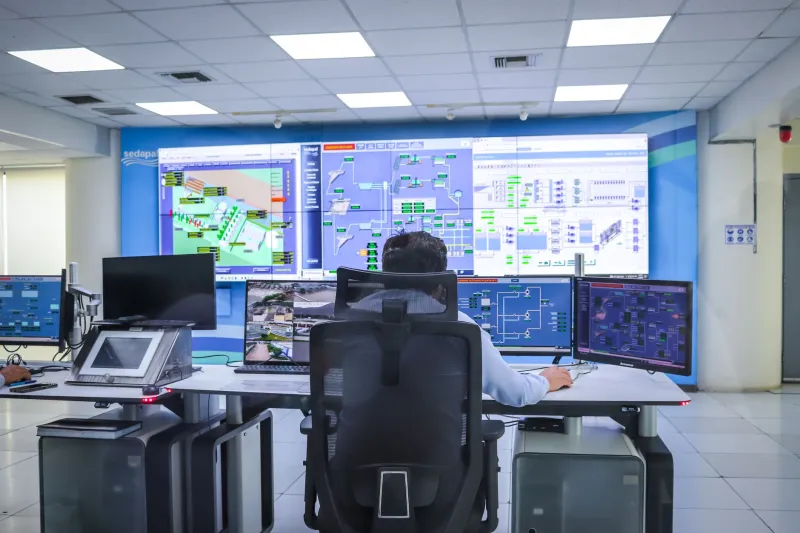
A typical operations display at a major US carrier hub shows real-time gate occupancy status, inbound aircraft position (updated from ASDE-X surface radar or ADS-B feeds), scheduled versus estimated arrival and departure times for every flight in the bank, ground crew assignment status, bridge serviceability flags, fuel order confirmation, and in many cases a live passenger connection count that indicates how many travelers on each inbound flight are booked onto outbound departures within the next ninety minutes.
That last data point — the connection count — is often the deciding variable in close gate allocation decisions. A flight arriving with 40 connecting passengers bound for a single outbound departure carries a different operational weight than one arriving with 40 passengers going to 15 different destinations. The former demands proximity. The latter permits flexibility.
Simmers who want to operate at this level of fidelity should begin building a mental model of connection density into their gate planning, even if the simulation software does not expose it directly.
The Priority Stack: How Decisions Get Made When Everything Is Urgent
Professional gate controllers do not treat every gate request as equal. They operate from an implicit — and in some cases explicit — priority stack that determines which flights receive preferred gate assignments when the available pool is constrained.
At most major US network carriers, the hierarchy functions approximately as follows:
International arrivals and departures occupy the top tier. These flights carry customs and immigration processing requirements that impose hard time constraints. A wide-body international arrival that misses its customs processing window creates a compliance event, not merely a delay. Gate proximity to Federal Inspection Services facilities is non-negotiable for these operations.
High-connection-density domestics occupy the second tier. These are the flights that serve as the structural spine of the hub's connecting bank. Delaying them does not inconvenience the passengers on board — it inconveniences the passengers on every downstream flight they feed.
Point-to-point services with schedule flexibility absorb the residual. These flights may be held at remote stands, assigned to gates requiring longer passenger walks, or delayed in boarding initiation if a preferred gate is expected to open within an acceptable window.
As a simmer managing a terminal-level scenario, applying this stack explicitly — rather than simply assigning the nearest open gate — will produce dramatically more realistic outcomes and, more importantly, will force you to make the same uncomfortable trade-offs that real controllers face.
Case Study: The Charlotte Douglas Morning Bank
Charlotte Douglas International Airport presents one of the most instructive examples of morning bank management in the US system. As the primary hub for American Airlines' east coast operations, CLT processes a morning departure bank that can see more than 80 aircraft movements within a two-hour window.
The terminal layout at CLT is notable for its single-spine concourse design. Unlike hub airports with multiple satellite terminals, CLT's concourses extend linearly from a central terminal building. This geometry creates both advantages and constraints for gate allocation. Gates at the far ends of Concourses A and E are operationally isolated from the central connecting flow — useful for parking overnight turns that do not require rapid redeployment, but costly to assign to high-connection-density arrivals.
A real CLT gate controller managing the morning bank will actively resist assigning connection-heavy arrivals to end-of-concourse positions, even when those gates are technically available, because the additional walk time for connecting passengers erodes the connection window. In a simulation of CLT, replicating this bias is not pedantry — it is operationally correct behavior.
Practical Strategies for Simmers
Translating this knowledge into simulation practice requires a structured approach. The following framework is designed to be applicable regardless of which software platform or airport scenery package you are using.
Build a gate tier map before you begin. Before the simulation session starts, categorize every gate in your terminal by its operational characteristics: proximity to customs facilities, concourse position relative to the central connection flow, bridge capability by aircraft type, and any known serviceability restrictions. This map becomes your allocation reference during the session.
Assign a connection weight to each inbound flight. Even if your simulation does not calculate this automatically, you can approximate it. Wide-body arrivals from connecting hub cities carry higher connection density than point-to-point narrowbody services. Use this as a proxy when the data is not explicit.
Maintain a reserve pool. Real operations centers do not assign every available gate at the start of the bank. They hold a small number of gates in reserve for unscheduled diversions, mechanical delays requiring gate access, and priority overflows. Simmers who assign every gate at session start leave themselves no flexibility when the first anomaly appears — and in a realistic simulation, anomalies appear reliably.
Practice deliberate delay absorption. When a conflict arises, identify the flight in your stack that can absorb a delay with the least downstream consequence, and assign it that delay explicitly. Do not allow the simulation to distribute delays randomly across the schedule. Controlled delay absorption is a skill, and it is one that separates reactive simmers from proactive ones.
The Operations Master Mindset
The distinction between a casual simmer and an operations master is not primarily technical. It is attitudinal. The casual simmer responds to gate conflicts as they arise. The operations master anticipates them, pre-positions resources to address them, and makes deliberate trade-offs rather than defaulting to the nearest available option.
The morning bank is the most demanding test of that mindset that a terminal simulation can provide. Master it, and every other operational scenario becomes more manageable by comparison.