Pushback Purgatory: The Dispatcher's Mental Checklist for Every Gate Release Delay
Every simmer has been there. The boarding sequence is complete, the engines are ready to start, and the tug is staged. You key the pushback command and nothing happens. Or worse — the simulation allows the push to begin and then abruptly stops it, with no explanation offered and no clear path forward. What feels like a software failure is often something more instructive: a simulation of the very real, very common phenomenon known in airline operations as a gate hold.
Real dispatchers do not find gate release delays mysterious. They find them inevitable. The question is never whether a delay will occur, but which category of delay it belongs to — and what the correct sequence of actions is to resolve it. Understanding that diagnostic logic transforms pushback purgatory from a frustration into one of the richest training environments gate simulation has to offer.
Why Gate Release Is Never Simple
An aircraft at the gate is not simply a vehicle waiting to move. It is the convergence point of at least six independent operational threads: flight planning and paperwork, crew logistics, passenger and baggage management, catering and provisioning, maintenance status, and ground equipment coordination. A release requires all six threads to reach completion simultaneously. In practice, they rarely do.
The dispatcher's job is to monitor all six threads in parallel, anticipate which one is most likely to be the trailing constraint, and apply resources to accelerate it before it becomes the critical path. That is a skill that simulation can teach — but only if the simmer understands what the threads actually are.
The Seven Blockages, in Order of Frequency
1. Paperwork and Release Documentation
The most common gate hold in commercial aviation is the simplest to understand: the flight release has not been signed. In the United States, FAA regulations require that a dispatcher and the captain jointly release each flight. If the dispatcher has not transmitted the final release — often because fuel figures changed late, weather required a revised alternate, or NOTAM conditions triggered a routing review — the aircraft cannot legally depart. In simulation terms, this is the equivalent of your flight plan not being accepted by the ATC add-on. Do not push back until the plan is confirmed and acknowledged.
2. Crew Legality and Late-Arriving Flight Crew
The second most frequent cause of gate holds is a crew member who is not yet legal to operate the flight. This can mean a first officer who timed out under duty hour regulations, a captain whose medical certificate lapsed, or simply a relief crew member whose inbound connection was delayed. Real dispatchers track crew positioning as obsessively as they track fuel loads. In your simulation, build this into your scenario planning by introducing artificial crew availability constraints before departure.
3. Passenger Manifest Discrepancies
When the passenger count on the boarding manifest does not reconcile with the number of passengers physically seated on the aircraft, the gate agent cannot close the door. This situation — known as a headcount discrepancy — is more common than the traveling public realizes, and it frequently requires a full door-to-door recount. For simmers building weight-and-balance scenarios, this is the operational expression of a load sheet error: the numbers on paper do not match reality, and the aircraft cannot move until they do.
4. Catering and Provisioning Conflicts
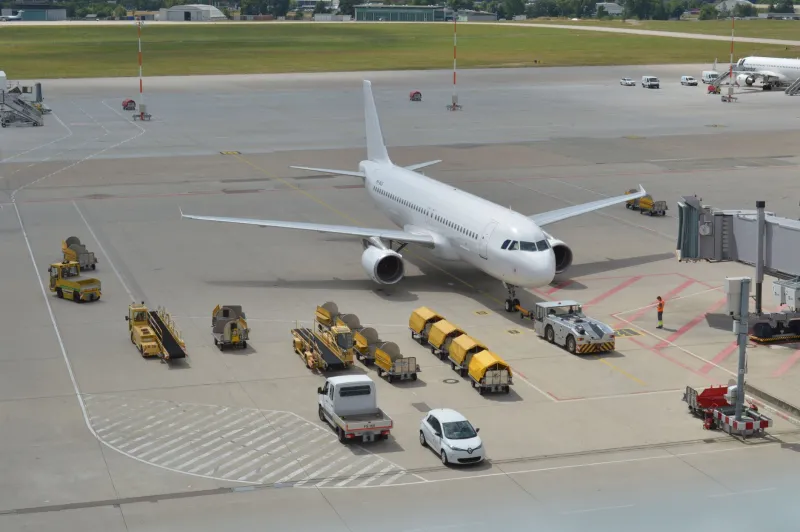
Late catering trucks are a staple of hub operations, particularly on transcontinental routes where meal service is contractually required. An aircraft cannot close its aft galley door while a catering vehicle is still positioned at that door. In simulation terms, this maps directly to ground service vehicle conflicts — the kind that prevent jetway retraction or tug positioning because the stand is not yet clear. Model this by requiring all ground service vehicles to be explicitly dismissed before initiating pushback.
5. Maintenance Flags and MEL Items
A Minimum Equipment List deferral that was not properly documented before departure creates one of the most serious gate holds in the dispatcher's repertoire. If a maintenance log entry is open — meaning a technician has identified a discrepancy but not yet signed off on the deferral or repair — the aircraft is not airworthy by FAA standards. Dispatchers work directly with maintenance control to resolve open log items, sometimes in real time on the phone while the crew waits. In your simulation, this is the moment to introduce artificial system fault scenarios and require yourself to work through a logical resolution before continuing.
6. Baggage and Cargo Weight Reconciliation
Baggage loading errors — bags loaded to the wrong hold, cargo positioned incorrectly for CG compliance, or a late-checked bag that was never loaded — create gate holds that require ramp coordination to resolve. The dispatcher must receive a confirmed final load from the ramp agent before the load sheet can be finalized. This is directly connected to the weight-and-balance discipline that serious gate simmers should already be practicing. An unresolved baggage discrepancy is not a minor administrative issue; it is a safety-critical hold.
7. Ground Equipment Conflicts and Tug Availability
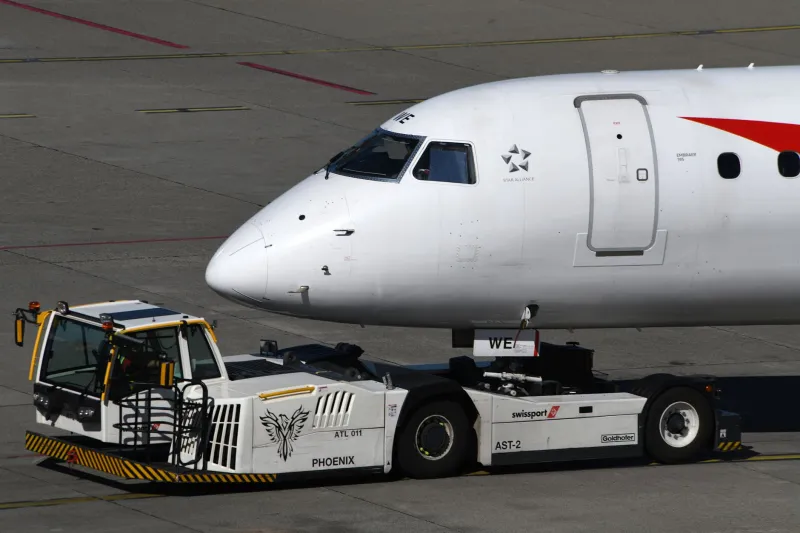
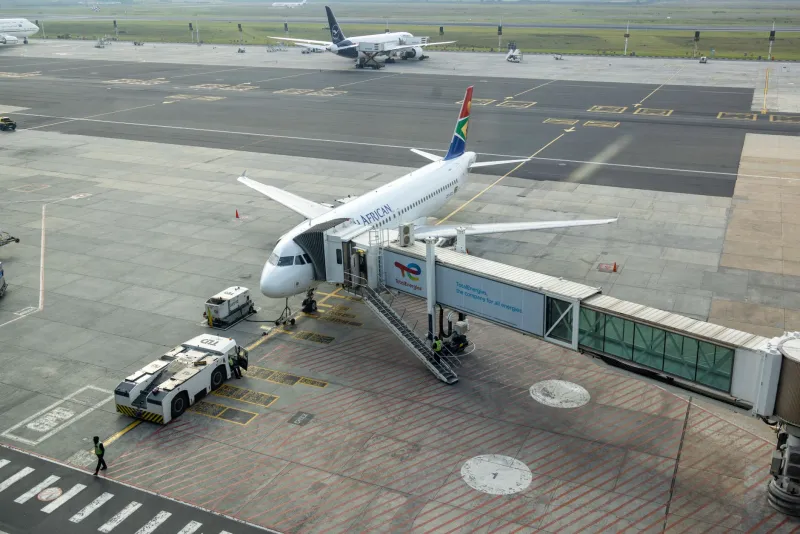
The final category — and the one most visible in simulation — is a ground equipment conflict that prevents pushback from physically beginning. A tug that is committed to another aircraft, a ground power unit that has not been disconnected, or a jetway that has not fully retracted all represent equipment-state conflicts. Real dispatchers coordinate with ramp supervisors to resolve these in sequence. In simulation, this is the discipline of confirming that every piece of ground equipment is in the correct state before issuing the pushback command.
Building Hold Scenarios Into Your Operations
The practical value of understanding this checklist is that it allows you to construct realistic hold scenarios that transform gate time from passive waiting into active problem-solving. Before each departure, work through all seven categories as a pre-pushback checklist. Introduce deliberate artificial constraints — a maintenance flag that requires a decision, a catering vehicle that needs an extra five minutes, a manifest discrepancy that requires resolution — and practice the dispatcher's response to each.
The goal is not to make your simulation slower. It is to make your gate time operationally meaningful. Every minute your aircraft spends at the stand in real airline operations is accounted for, justified, and documented. When your simulation reflects that discipline, the pushback clearance you finally receive carries the weight it deserves.
At VDG SimDock, the gate is not a waiting room. It is a workspace. Learning to manage what happens in that workspace — including the delays — is what separates a simmer who flies from a simmer who operates.