What the Ground Crew Knows: The Pre-Pushback Inspection Logic That Simulation Almost Never Captures

Photo by Photo by Pandu Agus Wismoyo on Unsplash on Unsplash
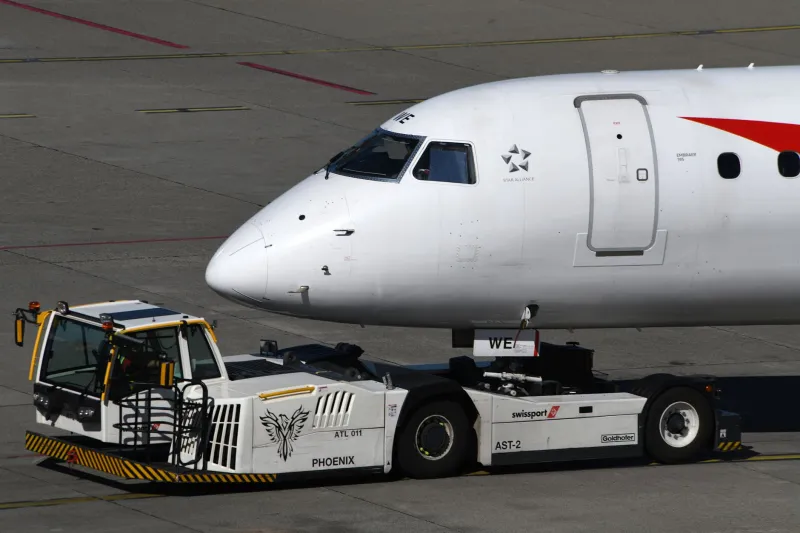
In flight simulation, the pushback sequence typically begins with a radio call and ends with the aircraft rolling away from the gate. What happens in between — from the simmer's perspective — is largely invisible: a tug appears, connects to the nose gear, and the aircraft moves. The complexity that real-world ground crews navigate in those same minutes is almost entirely absent from even the most sophisticated simulation add-ons.
This is not a criticism of simulation developers. Accurately modeling the full pre-pushback inspection protocol would require sensor data, crew communication systems, and real-time equipment telemetry that simply do not exist in the simulation environment. But for simmers who are serious about authentic gate operations, understanding what that protocol actually contains — and building a personal checklist framework that mirrors its logic — is the difference between simulating a pushback and genuinely replicating one.
The Hierarchy of Pre-Pushback Risk
Professional ground crew supervisors at major US carriers do not approach pre-pushback inspection as a flat checklist. They approach it as a risk hierarchy — a structured sequence in which the highest-consequence potential failures are assessed first, and the assessment of lower-priority items is conditional on the higher-priority items passing.
This hierarchical structure matters because it is efficient. A ground crew that discovers a cargo door seal failure in the first thirty seconds of inspection does not continue through the remaining checklist items before reporting the problem. The failure of a high-priority item terminates the sequence and triggers a hold. Understanding this hierarchy is the first step toward building a simulation framework that reflects genuine professional practice.
Priority One: Structural and Safety-Critical Checks
The first tier of the pre-pushback assessment addresses items whose failure could result in immediate safety consequences — not equipment damage or schedule disruption, but genuine danger to personnel and aircraft.
Cargo door status. Every cargo door must be confirmed closed, latched, and sealed before pushback is authorized. This is not merely a visual check from the ramp. In real-world operations, the crew chief physically verifies the door handle position and, on aircraft equipped with door warning systems, confirms that the cockpit indication matches the physical state. A cargo door that appears closed but is not fully latched can open during pushback, creating a hazard for ramp personnel and potentially damaging the door structure.
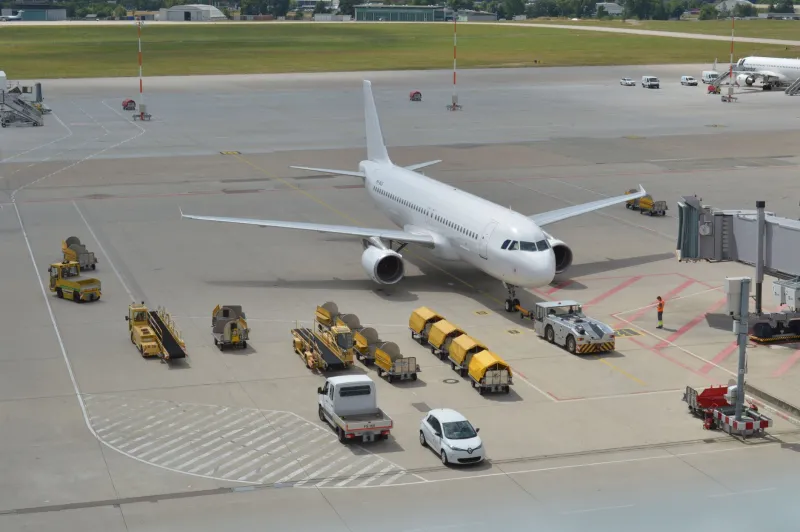
Ground equipment clearance. Before the tug engages the nose gear, the entire pushback path must be visually cleared. This includes not just the immediate area around the aircraft but the full arc of the planned pushback route. Catering trucks, fuel vehicles, belt loaders, and ground power units are all potential collision hazards, and real crews do not rely on memory or assumption about their positions — they walk the path or assign a wingwalker to verify clearance in real time.
Chock removal confirmation. Wheel chocks must be physically removed and accounted for before pushback begins. "Accounted for" means not just that they are gone from beneath the wheels, but that the crew chief has confirmed their location — they should be in a crew member's hands or in a designated storage position on the tug, not somewhere on the ramp where they could be run over or create a foreign object debris hazard.
Priority Two: Mechanical and Systems Readiness
The second tier addresses items that would not create immediate danger but would likely result in a return to gate, a maintenance hold, or a ground equipment failure during the pushback itself.
Brake temperature status. On aircraft that have recently arrived from a flight involving significant braking — a short-field landing, a rapid deceleration to an early turnoff, or an arrival after a long taxi with intermittent braking — brake temperatures may still be elevated at the time of the outbound pushback. Real ground crews at major carriers have access to brake temperature data through either aircraft-mounted sensors or handheld infrared equipment. Pushing back an aircraft with brakes that are outside the acceptable temperature range risks brake fade during the initial taxi-out and, in severe cases, brake fire.
For simmers, this translates into a realistic operational consideration: if you have just completed a flight that involved heavy braking, building a realistic ground time buffer before initiating pushback reflects what an actual ground crew would require.
Hydraulic fluid and ground power status. The transition from ground power to aircraft power — or the continuation of ground power through pushback depending on the operator's procedures — must be confirmed and coordinated before the tug moves. An aircraft that loses hydraulic pressure during pushback because the ground power unit was disconnected prematurely cannot reliably control its own brakes, creating a serious hazard for the tug crew.
Tug-to-aircraft connection integrity. The towbar or towbarless tug interface must be confirmed secure before any motion begins. In real operations, the crew chief physically checks the connection — not just visually, but by applying a small test load to verify that the coupling is engaged correctly. A connection that appears secure but is not fully engaged can fail during the initial push, particularly on aircraft with heavy fuel loads.
Priority Three: Communication and Coordination Confirmation
The third tier addresses the coordination elements that must be in place before pushback is authorized — not physical checks, but informational confirmations.
Cockpit communication established. The crew chief must have two-way communication with the flight deck before pushback begins. This is not optional and it is not assumed. In real operations, the crew chief makes a specific radio call — or interphone call, depending on the aircraft type — to confirm that the pilots are aware that pushback is about to commence, that the aircraft's parking brake is released, and that the flight deck is ready to receive pushback instructions.
ATC pushback clearance confirmed. The ground crew does not initiate pushback based on the flight deck's readiness alone. They must confirm that the flight deck has received ATC pushback clearance. A crew chief who begins pushing an aircraft that has not yet received clearance creates a potential conflict with other ramp traffic and, in some airport configurations, with active taxiway movements.
Headset personnel positioned. On most commercial operations, at least one crew member maintains a headset connection to the flight deck throughout the pushback. This crew member serves as the communication link between the cockpit and the tug operator, relaying stop commands, direction changes, and completion signals. Their positioning must be confirmed before motion begins.
Building This Into Your Simulation Workflow
Very few simulation add-ons model these checks automatically, which means the simmer must choose to impose them deliberately. The most effective approach is to create a personal pre-pushback card — a physical or digital checklist that mirrors the hierarchy described above — and require yourself to work through it before issuing the pushback command, regardless of what the simulation is or is not prompting you to do.
This practice does several things simultaneously. It adds realistic ground time to your departures, which in turn makes your gate sequencing more authentic. It creates moments of deliberate decision-making that surface operational considerations — brake temperature, equipment clearance, door status — that would otherwise pass unexamined. And it builds the kind of procedural discipline that characterizes real-world gate operations at every major US carrier.
Mastering the gate is not only about the moments when the aircraft is moving. It is equally about the moments immediately before it moves — when the ground crew is doing work that the simulation cannot see, and when the simmer's own discipline fills that gap.