Battle of the Hubs: Ranking the Best US Airport Mods for Authentic Gate Operations
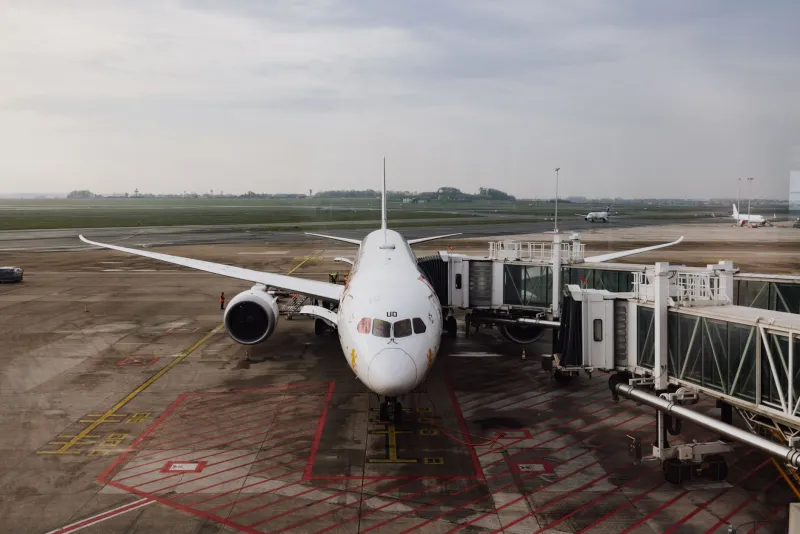
Choosing a home base in flight simulation is a surprisingly consequential decision. The airport you return to most frequently shapes your skill development, your procedural habits, and ultimately your enjoyment of the hobby. For simmers whose focus is gate mastery — the docking approach, the pushback, the ground coordination — the quality of the underlying airport mod matters enormously. A poorly constructed gate environment will undermine even the most disciplined operator.
VDG SimDock assessed the most prominent custom airport mods across four major US hubs, evaluating each against a consistent rubric: docking realism, gate variety and accuracy, ground traffic density, and seasonal weather fidelity. What follows is an honest ranking with operational notes for each location.
The Evaluation Framework
Before presenting results, it is worth clarifying what each criterion actually measures in practice.
Docking realism encompasses the accuracy of gate geometry, the presence and functionality of Visual Docking Guidance Systems, jetway alignment with aircraft door sills, and the physical spacing between adjacent gate positions.
Gate variety refers to the range of contact gate types — remote stands, narrow-body positions, wide-body gates, and cargo apron access — and how faithfully they replicate the real airport's published layout.
Ground traffic density evaluates whether the ramp environment feels populated and dynamic, including realistic GSE movement patterns, airline livery diversity among parked aircraft, and the behavior of vehicles sharing the taxiway environment.
Seasonal weather accuracy measures how well the mod's environmental design responds to weather injection tools, including snow accumulation on ramp surfaces, wet taxiway reflections, and low-visibility fog behavior around terminal structures.
Hartsfield-Jackson Atlanta International (KATL)
Overall Rating: Exceptional
Atlanta is, by most measures, the busiest passenger airport in the United States, and the leading KATL mods for both MSFS 2020 and X-Plane 12 reflect that operational complexity admirably. The seven concourses are reproduced with high geometric fidelity, and the international terminal's wide-body gate positions — which accommodate 747s and A380s — are among the most accurately modeled of any US hub mod currently available.
For docking operations specifically, Atlanta's parallel concourse layout creates an interesting challenge. Gate centerlines are tightly spaced, and the approach corridors between concourses demand precise heading management during the final taxi phase. VDGS functionality is present in the premium versions of both major KATL releases and responds correctly to a wide range of aircraft wingspan profiles.
The primary limitation is ground traffic density during peak schedule windows. While the static aircraft library is extensive, live traffic injection tools occasionally produce unrealistic parking assignments, placing regional jets at international gates and vice versa. Operators using AI traffic add-ons should invest time in calibrating airline parking rules before establishing Atlanta as a primary base.
Pro tip: Runway 28R arrivals feeding Concourse T present the longest taxi sequence in the complex. Use this as a deliberate exercise in progressive taxi discipline before attempting the tighter concourse approach corridors.
Dallas/Fort Worth International (KDFW)
Overall Rating: Strong
DFW's semicircular terminal layout is architecturally distinctive and operationally demanding, and the best available mods capture both qualities effectively. The International Parkway spine running between terminal pairs creates a unique ground movement environment that differs substantially from the linear concourse designs found at Atlanta or Los Angeles.
Gate variety at KDFW is genuinely impressive in the top-tier releases. Terminal D's international positions are modeled with accurate jetway configurations, and the remote cargo apron areas south of the main terminal complex are included in the more comprehensive versions. This gives operators a full spectrum of gate types to master within a single installation.
Seasonal weather accuracy is where KDFW mods earn particular distinction. North Texas weather — characterized by rapid convective development, ice storm events, and dramatic visibility fluctuations — is well-represented when paired with active weather injection. Ramp surface shading responds credibly to precipitation, and the wide-open terminal approach geometry amplifies crosswind effects during simulated frontal passages.
The notable weakness is jetway animation fidelity. Several gate positions in Terminals A and C exhibit minor misalignment with narrowbody door sills, particularly for the 737-800 variant. This is a cosmetic issue that does not affect docking scoring in most add-ons but is worth noting for operators who prioritize visual accuracy.
Pro tip: Terminal E's domestic gates are the most forgiving entry points for new DFW operators. Begin your familiarization sessions there before progressing to the tighter international positions in Terminal D.
Los Angeles International (KLAX)
Overall Rating: Good, With Reservations
LAX presents a genuinely complex evaluation. The airport's dual-horseshoe terminal layout, combined with the perpetual construction state of the real facility, means that any static mod is working against a constantly moving target. The best available KLAX releases are technically competent and visually impressive, but operators focused on gate accuracy will encounter periodic discrepancies between the virtual layout and the current real-world configuration.
Docking realism at the Tom Bradley International Terminal — KLAX's primary wide-body facility — is strong. Gate spacing, approach angles, and VDGS implementation are well-executed. The domestic terminals are more variable; some gate positions in the older horseshoe structures feel slightly oversized relative to their real-world counterparts, which reduces the challenge of precision approaches.
Ground traffic density is KLAX's strongest suit. The mod ecosystem around Los Angeles benefits from a large and active development community, which means high-quality traffic libraries with accurate airline distribution are readily available as companion installations. A fully configured KLAX session with live traffic active produces a convincingly busy ramp environment.
Seasonal weather accuracy, however, is limited by the airport's real-world climate. Los Angeles simply does not offer the weather drama of Atlanta or Dallas, and mod developers have understandably focused their environmental detail efforts elsewhere. Operators seeking weather-driven challenge should plan cross-country routing that brings them through LAX rather than basing there permanently.
Pro tip: The TBIT's remote gate positions, accessed via the midfield taxiway, provide excellent pushback complexity practice. The geometry demands precise heading planning before movement begins.
Denver International (KDEN)
Overall Rating: Highly Recommended for Advanced Operators
Denver earns a special commendation for operators who prioritize environmental difficulty alongside gate accuracy. The airport sits at 5,431 feet above sea level, and the best KDEN mods incorporate elevation-aware physics that affect ground roll performance, engine spool behavior during startup, and crosswind sensitivity during pushback — all of which have meaningful implications for gate departure procedures.
The Jeppesen Terminal's single-building design with three concourses connected by an underground train system is faithfully reproduced, and the remote Concourse C — requiring aircraft to taxi under the terminal apron — creates a distinctive ground movement challenge not found at any other major US hub. Gate variety is strong, with a healthy mix of narrow-body, wide-body, and cargo positions.
Seasonal weather accuracy is KDEN's defining advantage. Colorado's winter weather system — including blowing snow, ground blizzard conditions, and rapid temperature cycling — is modeled with exceptional fidelity in the premium releases. Ramp operations under simulated winter conditions at Denver represent some of the most demanding gate work available in civilian simulation.
Pro tip: Wind modeling at KDEN is influenced by the airport's exposed prairie location. Always check simulated winds before planning your gate approach heading, as surface gusts frequently exceed the reported average.
The Verdict
For operators whose primary goal is developing gate mastery across the full spectrum of US hub environments, the recommendation from VDG SimDock is to build a rotation rather than commit to a single base. Atlanta develops your precision approach discipline. Dallas challenges your weather decision-making. Los Angeles refines your traffic awareness. Denver tests your environmental adaptability. Together, they constitute a comprehensive curriculum for anyone serious about owning the gate.