Centerline Ghost: Diagnosing the Subtle Forces That Pull Your Aircraft Off Course in the Final 50 Feet
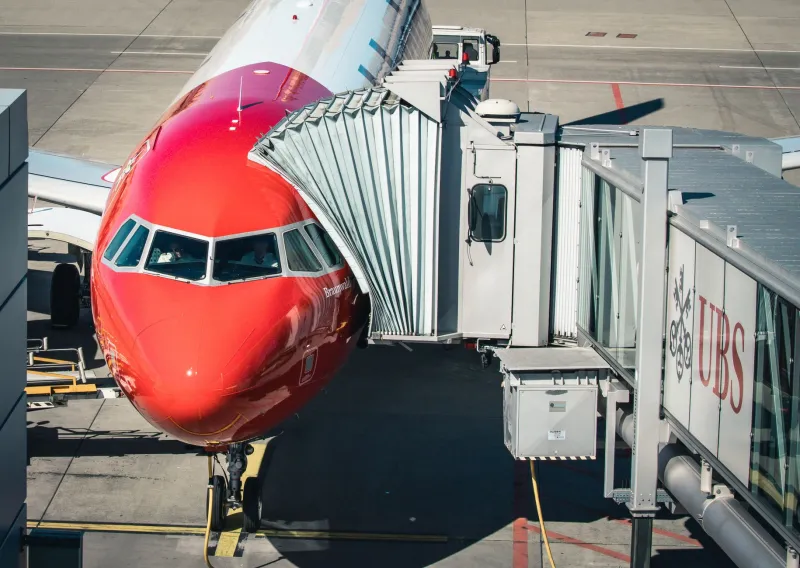
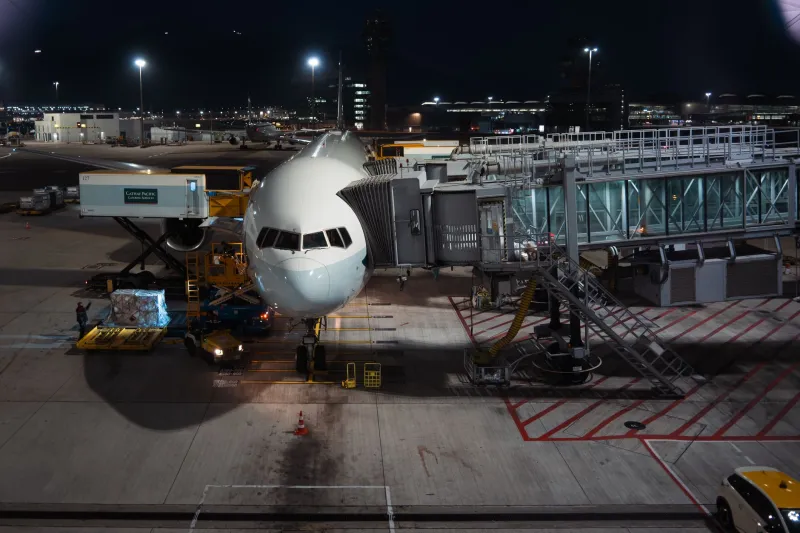
You have executed a textbook taxi. Your speed is controlled, your heading is locked, and the nose wheel tracking looks immaculate on the VDGS display. Then, somewhere inside the final 50 feet, the aircraft begins to drift. Imperceptibly at first — a few inches to the left, maybe a nudge to the right — and by the time the marshallers signal a stop, you are half a body width off the painted centerline. The gate docking indicator confirms what you already suspect: the approach was not clean.
This phenomenon, which VDG SimDock analysts have come to call the Centerline Ghost, is not a product of poor technique alone. It emerges from a layered interaction between simulator aerodynamic modeling limitations, control input latency, and environmental physics that most simmers never examine with any rigor. Understanding each contributing factor — and knowing how to compensate for them — is the difference between a cosmetic dock and a precision one.
The Aerodynamic Modeling Gap at Low Speed
Most commercial flight simulators are engineered with primary focus on airborne flight dynamics. The aerodynamic data tables that govern aircraft behavior at cruise altitude and during approach-to-landing are typically far more detailed than those governing behavior at ramp speeds. This disparity creates what engineers refer to as a low-speed modeling gap: a region of aircraft velocity, roughly between 1 and 5 knots during gate maneuvering, where the simulation's physics calculations become less granular and more susceptible to interpolation artifacts.
In practical terms, this means that the subtle aerodynamic forces acting on a 737's fuselage as it creeps down a gate lead-in line — asymmetric drag from adjacent structures, differential surface friction, low-frequency oscillation in the nose wheel steering response — are often approximated rather than precisely modeled. The result is a drift behavior that feels random but is, in fact, a deterministic output of incomplete physics data.
Simulators built on more sophisticated flight dynamics engines, particularly those used in professional training contexts, narrow this gap considerably. However, even premium consumer-grade platforms exhibit measurable low-speed modeling asymmetries that must be accounted for during final gate approach.
Wind Modeling Asymmetries and Ramp-Level Turbulence
Airport ramp environments are aerodynamically complex. Terminal buildings, jetway structures, fuel trucks, and parked aircraft all generate localized airflow disruptions that bear little resemblance to the clean wind conditions measured at runway level. Real-world ramp crews account for this intuitively; experienced pilots develop a tactile sense for how a crosswind behaves differently once the aircraft is surrounded by ground infrastructure.
In simulation, wind modeling at ramp level is frequently simplified. Many platforms apply a uniform wind vector across the entire airport environment, failing to account for the shadowing effect of terminal structures or the channeling effect of gate rows. This produces a scenario where a simulated 8-knot crosswind from the northwest applies equal pressure to an aircraft parked at an exposed remote stand as it does to one nestled inside a tight gate cluster — a physical impossibility in the real world.
The consequence for final gate approach is asymmetric lateral loading. If the simulator's wind vector has any crosswind component and the terminal building is not factored as a wind shadow, the aircraft will experience persistent lateral pressure that no amount of centerline technique can fully neutralize without deliberate correction. Identifying the prevailing wind direction before beginning your gate approach and anticipating which side of the centerline will require bias correction is an essential pre-approach discipline.
Rudder Input Lag and Ground Steering Transition
The transition from aerodynamic rudder authority to nose wheel steering authority is a critical and often poorly simulated phase of any ground roll. On most commercial aircraft, meaningful nose wheel steering engagement occurs at speeds below approximately 40 knots, but the exact handoff point — and the sensitivity curve of the steering system — varies considerably by aircraft type. Simulators must model this transition accurately for ground handling to feel authentic.
Many do not. What simmers frequently experience is a rudder-to-nosewheel transition that is either too abrupt or too gradual, creating a brief window of reduced directional authority precisely when fine lateral corrections are most needed. At ramp speeds, this lag is magnified because the aircraft has minimal kinetic energy to resist lateral perturbation. A 0.2-second delay in steering response, negligible at 120 knots, becomes operationally significant at 2 knots.
The calibration solution here is twofold. First, reduce overall controller sensitivity in the low-deflection range. Most simulation platforms allow axis sensitivity curves to be adjusted independently; a softer response in the first 20 percent of steering deflection will smooth out the transition period and reduce overcorrection. Second, develop the habit of applying steering inputs earlier than feels necessary during the final approach, effectively leading the aircraft's nose toward the centerline rather than reacting to deviation after it occurs.
Ground Effect Simulation and Its Influence on Lateral Stability
Ground effect — the aerodynamic phenomenon that alters lift and drag characteristics when an aircraft operates within approximately one wingspan of the ground surface — is well understood in the context of landing flare. Its influence during taxi operations is less frequently discussed, but it remains relevant for wide-body aircraft at very low speeds in conditions where any residual lift generation is possible.
During a gate approach in light headwind conditions, a wide-body aircraft moving at 3 to 4 knots with flaps partially extended may still be generating a small but non-trivial quantity of aerodynamic lift. Simulator ground effect modeling that does not accurately replicate the asymmetric lift distribution across a wing in close proximity to terminal infrastructure can introduce subtle roll tendencies that manifest as lateral drift. This is particularly observable in scenarios where one wing passes closer to a jetway or terminal wall than the other.
While no consumer-grade simulator perfectly models this interaction, awareness of the phenomenon helps simmers contextualize unexpected drift events. If your aircraft consistently drifts toward the terminal building side during final approach, asymmetric ground effect is a plausible contributing factor worth investigating through systematic approach angle variation.
A Systematic Calibration Process for Repeatable Centerline Precision
Eliminating the Centerline Ghost requires a structured approach rather than ad hoc correction. The following process is designed to isolate each variable and establish a stable baseline.
Step 1 — Baseline Documentation. Select a single gate at a familiar airport and conduct ten consecutive approaches under identical wind conditions (calm or very light). Record the lateral deviation at stop for each approach. This establishes your current drift signature and its consistency.
Step 2 — Controller Sensitivity Audit. Access your simulator's axis configuration and reduce nose wheel steering sensitivity by 15 to 20 percent in the low-deflection range. Repeat the ten-approach sequence and compare deviation data. If consistency improves, the original sensitivity curve was contributing to overcorrection drift.
Step 3 — Wind Variable Isolation. Conduct the same sequence with a 5-knot crosswind applied from alternating directions. Note whether drift direction correlates with wind direction. If it does, the simulator's wind modeling is influencing your approach, and you should incorporate a deliberate upwind bias into your centerline tracking.
Step 4 — Approach Geometry Adjustment. Experiment with approach angle. A shallow, nearly straight-in approach reduces the number of corrections required in the final 50 feet. A wider, curved approach introduces more variables. Identify the geometry that produces the lowest deviation variance across your test sample.
Step 5 — Progressive Load Testing. Once a calibrated baseline is established at your test gate, apply the same methodology at gates with different orientations, surrounding infrastructure, and wind exposures. Drift behavior is gate-specific; a calibration that works at one stand may require adjustment at another.
Mastering the Invisible
The Centerline Ghost is not a flaw in your fundamental technique. It is the cumulative output of simulator physics limitations, environmental modeling approximations, and control hardware characteristics that interact in ways that are difficult to perceive in real time. By analyzing each factor systematically and building a calibration framework tailored to your specific platform and hardware configuration, you can reduce lateral drift from an unpredictable nuisance to a managed, correctable variable.
Precision gate docking at VDG SimDock's standard is not simply about hand-eye coordination. It is about understanding the invisible forces at work during those final 50 feet — and having the technical discipline to account for every one of them.