Cockpit Geometry: What Veteran Airline Pilots See at the Gate That Simulation Cannot Show You
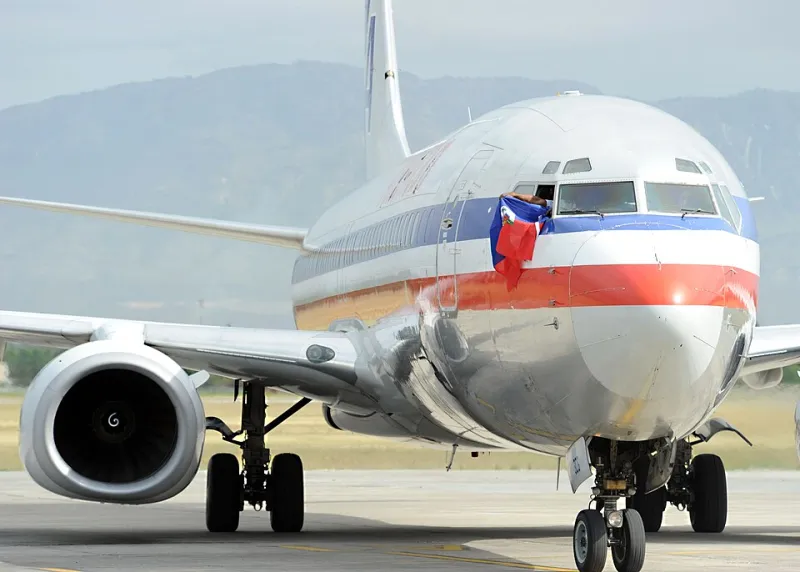
Photo: U.S. Navy photo by Senior Chief Mass Communication Specialist Spike Call, Public domain, via Wikimedia Commons
There is a moment, roughly thirty seconds before a commercial aircraft reaches its painted stop-bar, when an experienced captain begins making adjustments so subtle they barely register on the flight deck. A fractional correction on the tiller. A brief reduction in taxi speed. A glance at the wingtip clearance marker that lasts no more than a half-second. To an observer, it looks effortless—almost choreographed. To the simulation community, it is largely invisible, because the tools required to develop that instinct have never been properly engineered into the platforms we fly.
This analysis examines what professional pilots actually perceive during gate approach geometry, why that perceptual framework is so difficult to replicate in simulation, and what simmers can do to close the gap.
The Mental Model Behind Gate Approach
Captains who regularly operate into congested hubs—think Chicago O'Hare, Atlanta Hartsfield-Jackson, or Los Angeles International—develop what cognitive researchers sometimes call a "spatial schema" for gate navigation. It is not a checklist. It is not a memorized procedure. It is an internalized map of angles, distances, and rates of change that the brain builds over hundreds of repetitions.
A veteran 737 captain described it this way during a conversation with our editorial team: "You're not really looking at the nose. You're looking at the relationship between the nose and the centerline stripe, and you're feeling whether that relationship is stable or drifting. If it's drifting, you've already started correcting before you consciously know you're correcting."
An A320 captain who operates primarily out of Dallas/Fort Worth offered a similar perspective: "The VDGS [Visual Docking Guidance System] is a confirmation tool for me, not a primary reference. By the time the system is telling me I'm two meters out, I already know I'm two meters out. What I'm watching is the geometry of the jetway, the painted lead-in line, and the relationship of my wingtip to the terminal facade."
These descriptions reveal something critical: professional gate approach is a multi-reference process. Pilots are simultaneously processing the VDGS display, the lead-in line beneath the nose, peripheral wingtip clearances, ground crew hand signals, and the angular rate at which the terminal structure appears to grow in the windshield. Most simulation add-ons provide, at best, two of these references with any fidelity.
What Simulation Currently Offers—and Where It Falls Short
Modern flight simulation platforms have made meaningful advances in ground operations. High-quality airport scenery packages now render accurate lead-in line geometry, and VDGS plugins have become considerably more sophisticated over the past several years. Yet three perceptual gaps remain largely unaddressed.
Peripheral depth cues are absent or misleading. In real operations, a captain's peripheral vision registers the terminal facade, gate signage, neighboring aircraft, and service vehicles as a coherent three-dimensional environment. The brain uses the rate at which these objects expand in the visual field to estimate closure speed with remarkable precision. In a simulator running on a standard monitor setup, field of view constraints and flat-screen depth rendering strip away most of this peripheral information. The result is that simmers frequently misjudge closure speed on final approach to the stop-bar.
Micro-movement feedback does not exist. Real aircraft transmit tactile information through the tiller and rudder pedals. A slight surface irregularity, a crosswind gust at low speed, or a brief tug from an asymmetric brake application all feed into the pilot's spatial awareness. Simulation hardware, even high-end yoke and rudder setups, cannot replicate this fidelity at taxi speeds below five knots.
Ground crew visual language is underrepresented. Marshaller hand signals carry nuanced information—not just direction, but urgency and confidence. An experienced captain reads a marshaller's body posture as much as their hand position. Simulation AI marshallers, where they exist at all, present static or looping animations that convey almost none of this situational texture.
Reverse-Engineering the Intuition
Accepting that current platforms cannot fully replicate real-world gate geometry does not mean the gap is unbridgeable. Several deliberate training practices can meaningfully develop the spatial reasoning that professional pilots acquire through repetition.
Fly the same gate repeatedly across different conditions. Real pilots build their spatial schema through repetition at specific airports and specific gates. Simmers who approach every session as a new destination miss the opportunity to internalize geometry. Selecting two or three home-base gates at a chosen hub and flying approaches to those gates across varied weather, lighting, and traffic conditions will accelerate the development of reference-point memory in ways that random routing never will.
Disable the VDGS during practice sessions. This may feel counterintuitive, but removing the digital stop-bar reference forces the brain to develop independent distance judgment using the lead-in line, the terminal facade, and the painted ground markings. Reintroducing the VDGS after twenty or thirty practice approaches will reveal how closely your unassisted judgment aligns with the system's measurements. The delta between the two is a direct indicator of how much spatial schema development remains.
Use external camera views for post-approach review only. Many simmers use external views during the approach itself as a compensatory tool for the perceptual gaps described above. This practice actively prevents the development of cockpit-based spatial reasoning. External views are genuinely valuable, however, as a post-approach review mechanism—allowing you to observe your wingtip clearances, centerline tracking, and stop-bar accuracy from angles that the cockpit camera cannot provide during the approach itself.
Slow down more than feels natural. Real gate approaches at major US carriers typically conclude at speeds between one and two knots during the final ten meters. Most simmers approach too fast, which compresses the time available for micro-corrections and masks the subtle geometry reads that professional pilots rely upon. Practicing at artificially slow speeds—even slower than real-world norms—trains the brain to process spatial information at a more deliberate rate before the speed is gradually increased.
The Simulation Designer's Challenge
For developers building gate operations add-ons, the challenge is not technical accuracy in the conventional sense. Lead-in line geometry can be measured and modeled. VDGS behavior can be scripted. What cannot easily be engineered is the perceptual richness of the real-world environment—the accumulated sensory context that tells a captain, without conscious calculation, that something is slightly off.
The most promising direction for future development lies in enhanced peripheral rendering and dynamic ground crew behavior. If simulation platforms can expand the visual field of view during taxi operations and introduce more behaviorally nuanced marshaller animations, the perceptual gap will narrow. Until that development arrives, however, the burden falls on the simmer to train deliberately and honestly.
Mastering the gate is not a matter of following a checklist. It is a matter of building a mental model that operates faster than conscious thought. The pilots who make gate approach look effortless have simply done the repetitions. On VDG SimDock, so can you.