Ground Control to Major Sim: How Real ATC Procedures Shape Every Gate Assignment at US Airports
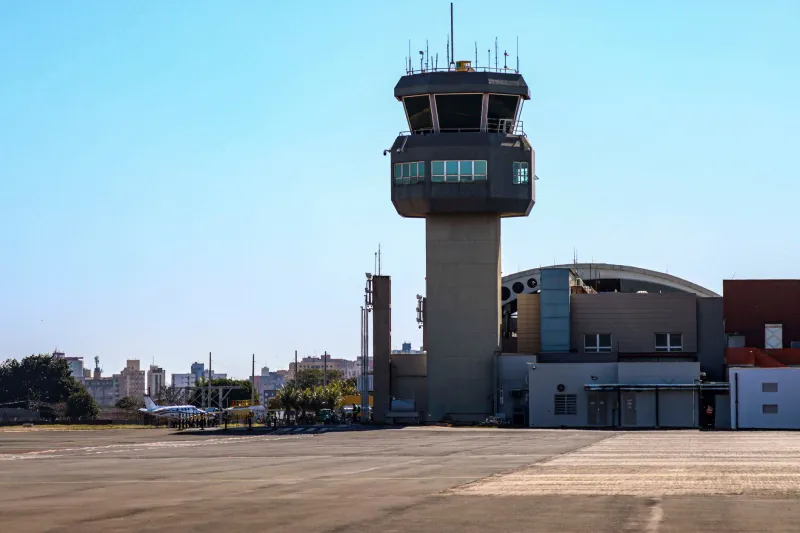
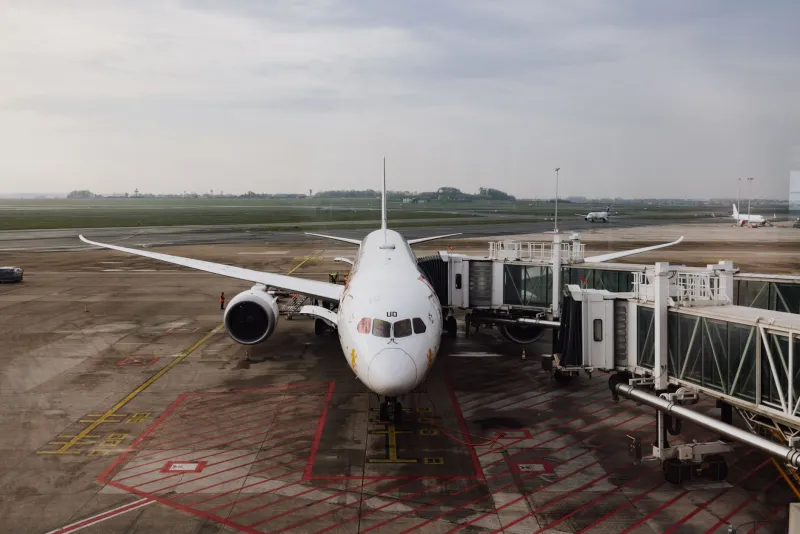
When a Delta mainline flight touches down at Hartsfield-Jackson Atlanta International, the cockpit crew does not simply taxi to whichever gate looks convenient. Dozens of invisible decisions have already been made on their behalf — decisions shaped by departure queues, inbound traffic density, gate availability, airline contract requirements, and the real-time judgment of ground controllers working one of the most demanding positions in aviation. For the serious flight simulation enthusiast, replicating this choreography is not merely an aesthetic pursuit. It is the difference between operating a convincing virtual airport and running what amounts to a glorified parking lot.
This analysis examines the procedural architecture behind real-world ground control at major US airports, and provides a framework for incorporating those same principles into your simulation environment.
The Anatomy of a Ground Control Frequency
At most major US airports, ground control is divided across multiple frequencies, each responsible for a discrete geographic zone of the airfield. Chicago O'Hare International Airport (KORD), for example, operates separate ground control sectors for the north and south complexes, with a dedicated frequency for the inner taxiway loop. This segmentation exists because a single controller cannot safely manage the surface movement of dozens of aircraft simultaneously across a sprawling ramp.
For simmers using platforms such as VATSIM or POSCON, these frequency divisions are typically replicated by the controlling facility. However, even in offline simulation, understanding that ground control is a zoned operation — not a single omniscient voice — changes how you mentally model taxiway routing. Aircraft handed off between zones must receive updated taxi instructions. Crossing points require explicit clearances. The expectation of seamless, uninterrupted taxi guidance is itself unrealistic.
Listening to archived ATC recordings through resources such as LiveATC.net or the FAA's archived audio libraries provides an invaluable reference. A thirty-minute recording from KLAX ground on a peak afternoon will reveal the cadence, phraseology, and decision logic that no written guide can fully replicate.
Gate Assignment Logic: It Is Not Random
One of the most commonly overlooked dimensions of airport realism is the non-arbitrary nature of gate assignments. In the real world, gate allocation at US commercial airports is governed by a combination of airline gate contracts, slot agreements, and dynamic ramp management software. United Airlines does not park at a Southwest gate simply because it happens to be empty.
The primary categories of gate control are:
- Preferential Use Gates: Exclusively assigned to a single carrier under a long-term lease. These are the dominant gate type at hub airports.
- Common Use Gates: Managed by the airport authority and assigned dynamically based on availability, typically used by international carriers or low-frequency operators.
- Shared Use Gates: Contracted between two or more carriers, often with time-of-day scheduling agreements.
For custom airport scenario builders, incorporating this logic means defining gate ownership before a single aircraft spawns. A scenario at Dallas/Fort Worth International (KDFW) should reflect American Airlines' overwhelming gate dominance in Terminals A, B, C, and D. Placing a United 737 at a gate in Terminal C without a legitimate operational reason is the kind of detail that erodes authenticity for informed observers.
Taxiway Routing: The ATIS, the NOTAM, and the Unexpected
Ground controllers do not issue taxi instructions from memory alone. They work within a framework established by the current Airport Traffic Information Service (ATIS) broadcast, active NOTAMs (Notices to Air Missions), and their facility's Standard Operating Procedures. A closed taxiway, a construction zone near Terminal B, or a temporarily displaced threshold will alter every routing decision made during that operational period.
For simmers seeking to inject authentic unpredictability into their scenarios, the FAA's NOTAM system is publicly accessible and fully searchable by airport identifier. Reviewing historical NOTAMs for a target airport — particularly those from high-traffic periods such as Thanksgiving week or summer peak season — reveals the kinds of surface restrictions that genuinely complicate ground movement. Building these restrictions into a custom scenario, then requiring the simmer to adapt their taxi routing accordingly, produces a quality of procedural challenge that prefabricated scenarios rarely achieve.
Additionally, the FAA publishes Airport Diagram charts through SkyVector and ForeFlight that show all named taxiways, hold short points, and runway crossing locations. Cross-referencing these diagrams with LiveATC recordings allows a simmer to follow along in real time, tracing each instruction against the physical layout of the airport.
Hold Short Points and the Queue Hierarchy
Perhaps the most nuanced aspect of ground control operations is the management of runway crossing queues. At airports with intersecting taxi routes, aircraft frequently accumulate at hold short lines, waiting for crossing clearances that are sequenced by the controller based on departure priority, wake turbulence separation requirements, and runway configuration.
At Boston Logan International (KBOS), the compact layout of the airfield creates frequent conflicts between arrivals taxiing inbound and departures queuing for Runway 33L. Listening to ground control recordings during a busy morning push at Logan illustrates how controllers manage these conflicts through sequencing calls, progressive taxi instructions, and occasional re-routing.
For multiplayer simulation environments, assigning one participant to the ground control role — armed with a current airport diagram and a set of pre-defined traffic scenarios — produces a level of operational realism that automated ATC systems cannot approximate. The human controller will make imperfect decisions, issue corrections, and occasionally sequence aircraft in unexpected ways. That imperfection is, paradoxically, what makes the experience authentic.
Translating Procedure into Scenario Design
The practical application of this knowledge for VDG SimDock users centers on scenario architecture. Before building a custom gate operations scenario, consider establishing the following:
- Gate ownership map: Define which carriers control which gates, based on real-world leasing arrangements at your chosen airport.
- Active NOTAM layer: Pull two or three historical NOTAMs from your target airport and build their restrictions into the scenario geometry.
- Frequency zone boundaries: Identify where ground control handoffs occur and incorporate those transition points as scenario waypoints or checklist items.
- Peak traffic profile: Use historical flight data from FlightAware or the BTS On-Time Performance database to model realistic gate utilization rates for your chosen time window.
The result is a scenario that does not merely look like a major US airport — it behaves like one. Ground controllers are not decorative. They are the architects of surface order, and understanding their craft is essential to mastering the gate.