Eyes Before Engines: The Proactive Risk Assessment Protocols That Keep Aircraft Safe at the Gate

There is a moment — quiet, unhurried, and almost entirely invisible to the traveling public — that occurs before every successful gate arrival at a US commercial airport. A gate agent steps onto the ramp, scans the immediate environment with practiced deliberateness, and begins working through a mental framework that has been refined by years of operational experience. No clipboard is required. No formal announcement is made. Yet this brief assessment is, in many respects, the most consequential act in the entire turnaround sequence.
For simulation enthusiasts who have invested in high-fidelity airport environments and realistic ground operations, replicating this pre-positioning discipline is the difference between a gate procedure that looks authentic and one that genuinely feels authentic. The distinction matters more than most simmers appreciate.
The Foundation: Spatial Mapping Before the Aircraft Arrives
Professional gate agents do not wait for an aircraft to appear on the taxiway before they begin their assessment. The evaluation starts well in advance — often ten to fifteen minutes before scheduled arrival — and it begins with what experienced ramp personnel call spatial mapping.
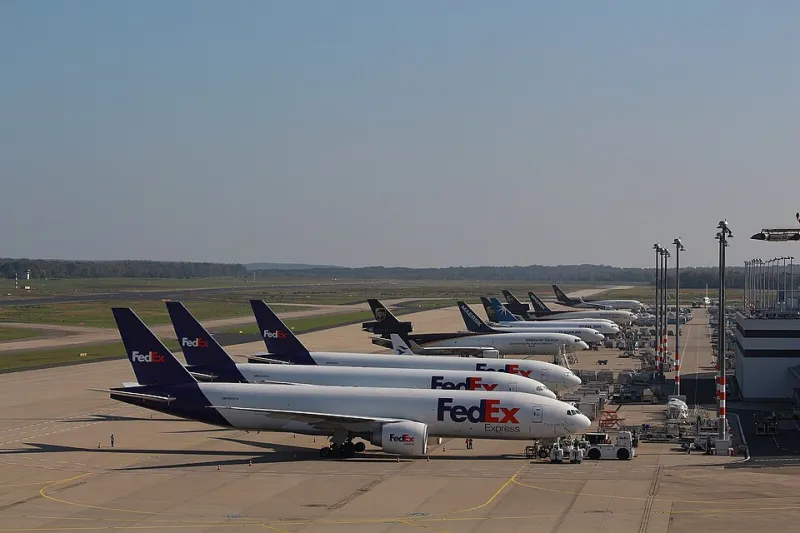
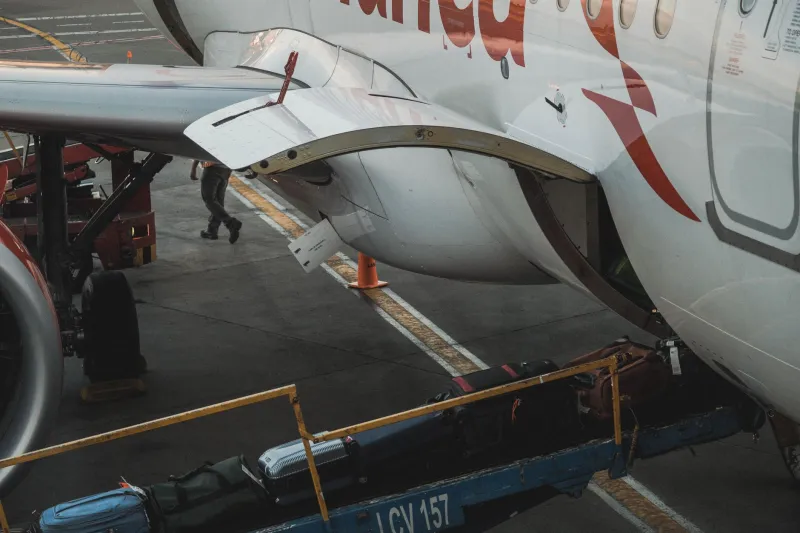
This involves mentally charting every fixed and mobile object within the gate's operational footprint. Ground service equipment parked in adjacent positions, jetway bridge angles, catering trucks that may have been repositioned since the last departure, fuel hydrant covers, and even the accumulated debris from a recent pushback all factor into the initial assessment. In high-traffic US hubs such as Chicago O'Hare, Dallas/Fort Worth, or Atlanta Hartsfield-Jackson, where adjacent gate activity is essentially continuous, this spatial map changes by the minute.
For the simmer, this translates directly into a pre-arrival walkthrough of the gate environment. Before initiating any aircraft docking sequence, pause and audit your virtual ramp. Are ground service vehicles positioned outside the aircraft's wing sweep arc? Is the jetway retracted to its default angle, or has a prior operation left it partially extended? These details are not cosmetic — they are the raw material of realistic risk management.
Environmental Reads: What the Conditions Are Telling You
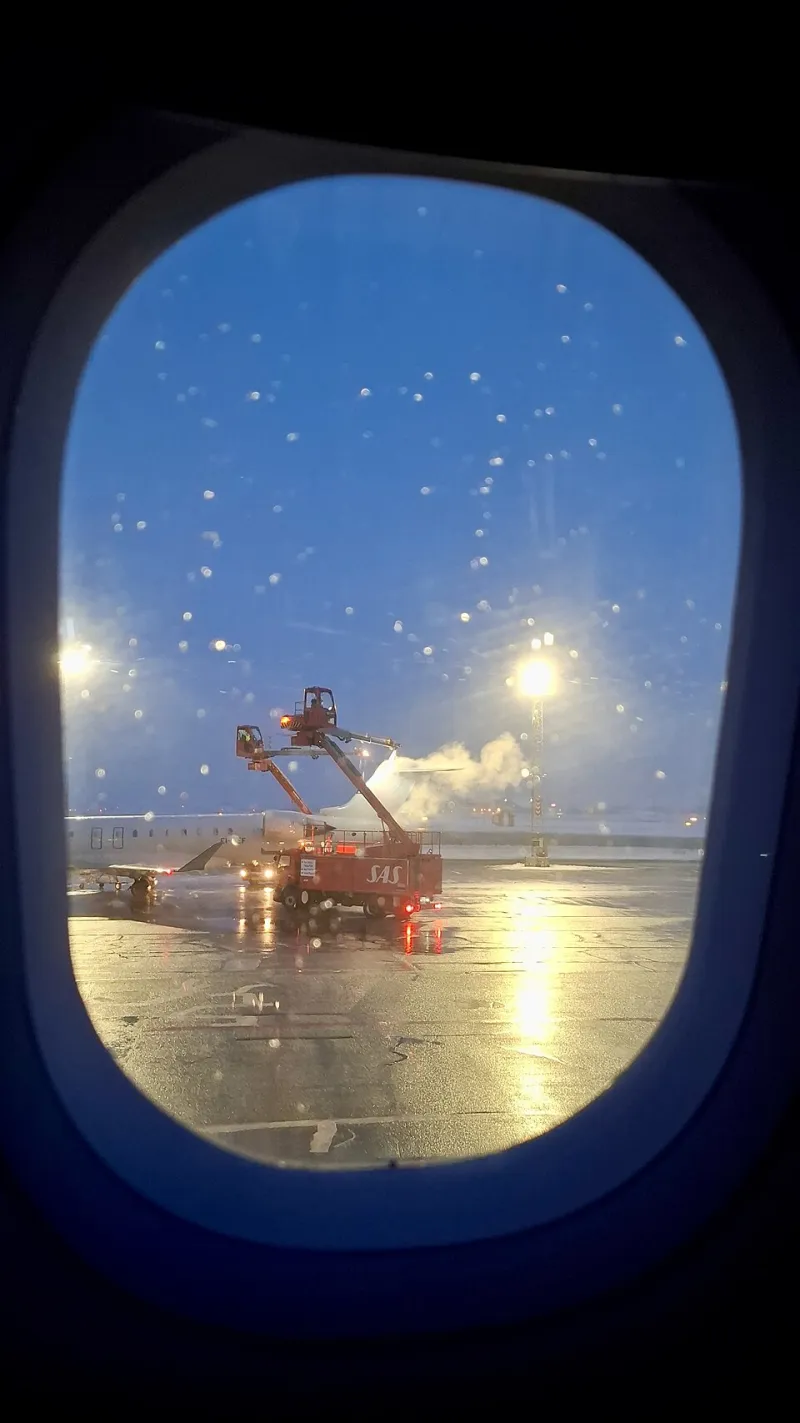
Experienced gate agents are also environmental readers. Wind direction and speed inform their assessment of jetway drift and fuel vapor dispersal. Wet or icy ramp surfaces — a persistent concern at northern US airports from November through March — alter stopping distances for both equipment and, in rare but documented cases, aircraft during the final meters of approach. Visibility conditions, including low-visibility operations that trigger specific FAA ground movement protocols, modify the entire communication and signaling framework.
This environmental awareness is not passive observation. It feeds directly into decisions about where personnel stand, how equipment is staged, and whether a gate agent requests a hold on the arriving aircraft's approach. In simulation, environmental conditions are frequently treated as aesthetic backdrops rather than operational variables. Treating them as the latter — adjusting your ground crew positioning and equipment staging in response to simulated weather — adds a layer of procedural fidelity that most airport scenarios lack entirely.
The Decision-Making Hierarchy: Who Calls What
One of the most instructive aspects of real gate operations for simmers is understanding the decision-making hierarchy that governs pre-arrival risk assessment. At US commercial airports, this hierarchy is both formal and situational.
The gate agent holds primary responsibility for the immediate gate environment. However, that authority operates within a broader framework that includes the airline's ground operations supervisor, the airport authority's ramp control function, and — when specific hazards are identified — the aircraft's flight crew via the marshaling and communication chain. A gate agent who identifies an unsecured piece of equipment in the wing path does not simply move the object. The sequence involves communicating the hazard, confirming clearance, and in some cases requesting a revised docking approach from the marshaler.
This layered accountability structure is something simulation platforms rarely model explicitly, but it can be approximated through deliberate practice. Assign mental roles to your ground crew. Establish a personal protocol that requires you to verbally confirm — even silently — that each layer of the hierarchy has been satisfied before you authorize the docking sequence to proceed. It sounds procedurally rigid because it is. That rigidity is precisely what prevents incidents.
Real-Time Adjustments: The Checklist That Never Stops
Perhaps the most sophisticated element of professional gate agent practice is the capacity for real-time adjustment. The pre-arrival assessment establishes a baseline, but conditions change. An adjacent pushback that was scheduled after your arrival may be moved forward. A fuel truck that was cleared from the gate area may return due to a neighboring aircraft's delay. Weather conditions can shift within the arrival window.
Gate agents are trained to treat their situational awareness as a continuous loop rather than a completed task. The assessment does not end when the aircraft begins its final taxi to the gate — it intensifies. Marshaling signals, communication with the flight deck, and monitoring of equipment positions all occur simultaneously during the final approach phase.
For simmers, this continuous loop discipline is achievable through a straightforward habit: conduct a secondary environmental scan at the moment the aircraft enters the gate's visual cone, typically when it turns off the taxiway toward the terminal. This mid-sequence check catches the category of hazard that pre-arrival assessments miss — the dynamic, last-minute change that transforms a clean gate into a potential incident.
Translating Professional Practice Into Simulation Consequence
The ultimate purpose of internalizing these protocols is not procedural compliance for its own sake. It is the cultivation of genuine operational consequence within your simulation environment. When a gate agent's invisible checklist fails in the real world, the results range from equipment damage and flight delays to, in severe cases, aircraft structural incidents that ground a plane for hours or days.
In simulation, consequence is self-imposed. The platform will not penalize you for skipping the pre-arrival scan. The jetway will not automatically collide with a fuselage you failed to assess. But simmers who impose these standards on themselves — who treat the invisible checklist as a non-negotiable element of every gate operation — report a qualitatively different experience at the terminal. The gate becomes a managed environment rather than a parking exercise.
At VDG SimDock, that distinction is the entire point. Mastering the gate means understanding not just the mechanics of docking, but the professional discipline that makes every successful arrival possible. The invisible checklist is where that discipline begins.
Building Your Own Pre-Arrival Protocol
For those ready to formalize this practice, consider developing a written pre-arrival protocol specific to the aircraft types and airport environments you frequent in simulation. Include a spatial mapping step, an environmental conditions assessment, a decision-hierarchy confirmation, and a mid-sequence secondary scan. Keep it brief — five to seven items — and apply it consistently.
Over time, the checklist becomes internalized. The scan becomes automatic. And the gate, which once felt like a destination, begins to feel like what it actually is: a managed operational environment where preparation determines outcome.