After Dark on the Ramp: A Simmer's Operational Guide to Overnight Cargo Runs and Late-Night Airport Procedures
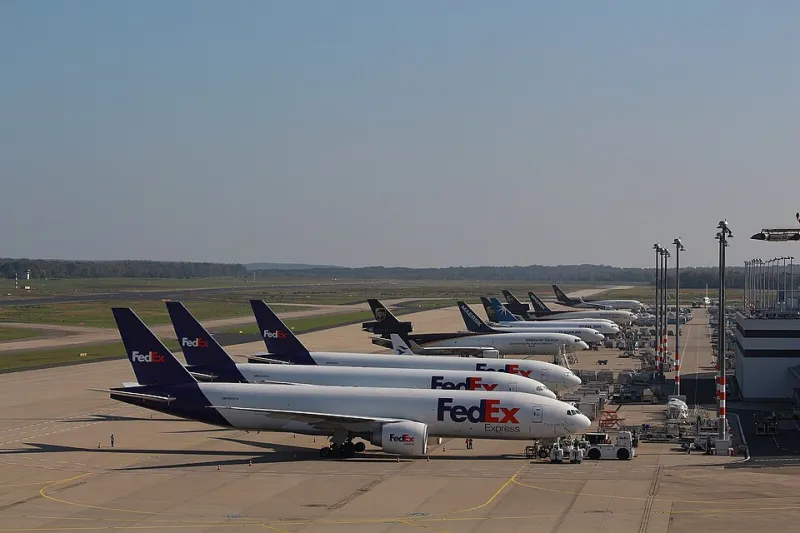
Photo: ISORauscht, CC BY-SA 4.0, via Wikimedia Commons
There is a version of every major US airport that most simmers never encounter. It exists between roughly 11:00 PM and 5:00 AM local time, and it operates according to a logic that is fundamentally different from the daytime world of gate holds, boarding announcements, and continuous ground traffic. In this nocturnal environment, the Boeing 767 freighter is king, taxiway lighting takes on outsized navigational importance, and a single ground equipment failure can cascade into a multi-hour delay because the maintenance crew on duty numbers three people instead of thirty.
This guide is written for the simmer who wants to go beyond the standard departure scenario and engage authentically with overnight freight operations—the logistical backbone of US air commerce and one of the most underrepresented operational environments in flight simulation.
Understanding Why Airports Transform After Dark
The transformation of a major US airport after passenger curfew is not incidental. It is the product of deliberate regulatory frameworks, community agreements, and airline scheduling strategies that collectively reshape every aspect of ramp behavior.
Noise abatement procedures are the most significant single driver. Under the FAA's Part 150 Airport Noise Compatibility Program, airports develop noise exposure maps and implement operational restrictions designed to protect surrounding communities. At airports such as John Wayne in Orange County, California, these restrictions are among the strictest in the country—Stage 2 aircraft are effectively prohibited, and even Stage 3 operations face curfew limitations. At larger hubs including Los Angeles International, San Francisco International, and New York's JFK, preferential runway systems are activated after certain hours, routing departures and arrivals over less densely populated corridors regardless of wind conditions that might favor different runways during the day.
For the simmer, this means that the runway in use at 2:00 AM may be entirely different from the one serving traffic at 2:00 PM, even under identical meteorological conditions. Replicating this requires configuring time-of-day runway preferences in your simulation environment rather than relying solely on wind-driven runway selection logic.
The Cargo Ramp: A Different World
Freight operations at US hub airports concentrate at dedicated cargo facilities that are, in many cases, physically separated from passenger terminals. Memphis International—the global hub for FedEx—and Louisville Muhammad Ali International—the UPS Worldport hub—are the most extreme domestic examples. At these facilities, overnight activity dwarfs anything occurring during daytime hours. Hundreds of aircraft movements are compressed into a narrow operational window, with inbound freight sorted and reloaded onto outbound aircraft in a matter of hours.
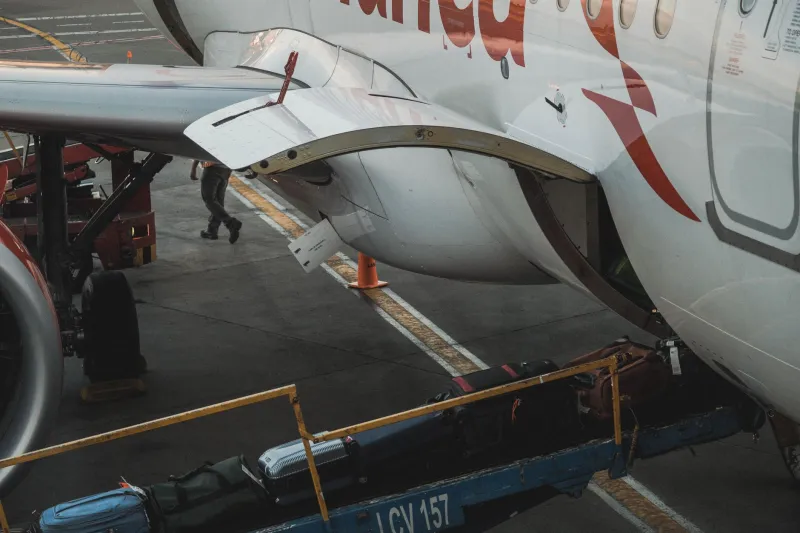
Even at airports where cargo is secondary to passenger traffic, the overnight cargo ramp has a distinct character. Ground support equipment is concentrated differently. Cargo loaders—also called K-loaders or hi-loaders—are positioned at aircraft main-deck and lower-lobe cargo doors rather than at passenger boarding bridges. Forklift traffic moves between aircraft and freight facilities continuously. Fuel trucks operate on a compressed schedule because the number of departures within a short window demands rapid sequential servicing.
For simulation purposes, accurately representing a cargo ramp requires replacing jetway animations with cargo door service animations, repositioning ground equipment to reflect freight handling rather than passenger boarding, and adjusting the timing of service sequences to match the compressed turnaround cycles characteristic of freight operations. A passenger widebody might turn in 90 minutes at a busy hub; a comparably sized freighter in an integrated freight sort operation may target 45 minutes or less.
Noise Abatement Departure Procedures: Flying Quietly in the Dark
The FAA publishes Noise Abatement Departure Procedures (NADPs) for airports where community noise sensitivity warrants special departure profiles. Two standard profiles exist: the Close-In NADP, which prioritizes noise reduction for communities near the airport boundary, and the Distant NADP, which targets communities further along the departure path.
At night, many US airports shift from the Distant NADP to the Close-In profile, requiring pilots to initiate thrust reduction and begin flap retraction at lower altitudes than during daytime operations. This affects climb gradient, fuel burn in the initial departure phase, and the specific power settings used during climbout. Simmers flying overnight departures from noise-sensitive airports should research the applicable NADP for their departure airport and configure their flight management system accordingly rather than applying a generic climb profile.
Additionally, several major US airports publish specific departure procedures that apply exclusively during nighttime hours. These procedures may restrict turns below certain altitudes, prohibit the use of maximum continuous thrust above specific heights, or require level-off segments that would not appear in a standard daytime SID. Reviewing the relevant Chart Supplement pages for overnight-specific notes is a worthwhile exercise before any late-night departure scenario.
Taxiway Routing After Hours: The Logic of the Empty Airport
Daytime taxiway routing at a busy US hub is shaped by the need to keep traffic moving across a complex network while avoiding conflicts between arriving and departing aircraft. Controllers issue progressive taxi instructions, hold-short commands, and crossing clearances in rapid succession. The system is optimized for throughput.
At 2:00 AM with three aircraft on the field, that optimization logic changes entirely. Controllers at many airports shift to simplified routing that uses fewer taxiway segments, partly to reduce the cognitive load on reduced overnight staffing and partly because certain taxiway lighting systems operate in low-power mode during off-peak hours to reduce energy consumption and maintenance wear. Some secondary taxiways may be effectively deactivated, with signage and edge lighting dimmed or extinguished, making them unsuitable for routine use in reduced-visibility conditions.
This means that an overnight taxi route between a cargo ramp and an active runway may follow a longer, less direct path than the equivalent daytime route—not because of traffic conflicts, but because the most direct path traverses infrastructure that is not fully activated. Simmers should consult airport diagrams and, where available, overnight ATIS recordings to understand which routing patterns apply during the hours they are simulating.
Ground Equipment Scarcity and the Single-Point-of-Failure Problem
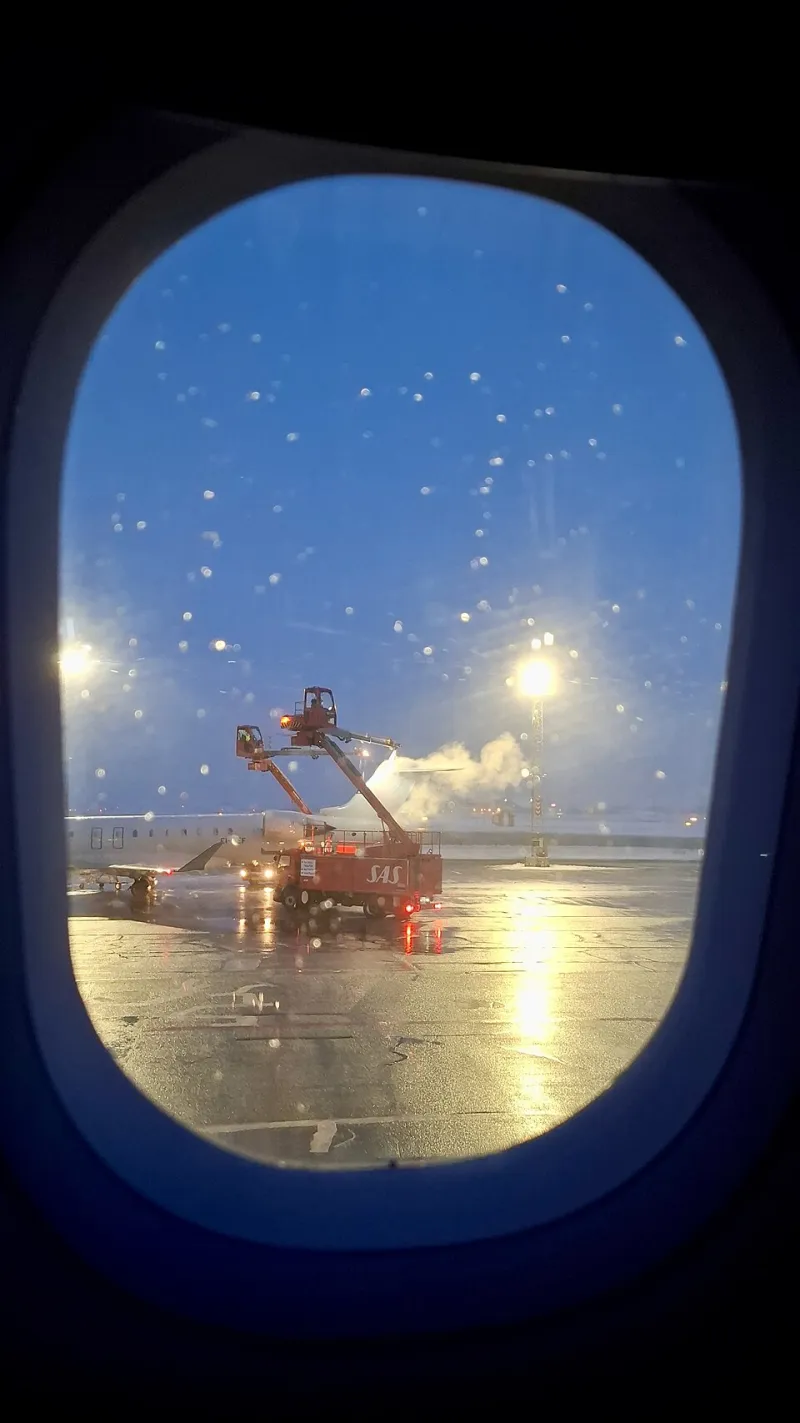
Perhaps the most operationally significant difference between daytime and overnight ramp work is the dramatic reduction in available ground support equipment and personnel. At a major US hub during peak morning banks, a dozen ground crews may be operating simultaneously across a concourse. At 3:00 AM, a cargo facility may have one fueling truck, one tug, and a single ground supervisor covering the entire ramp.
This scarcity transforms equipment failures from minor inconveniences into significant operational disruptions. A single hydraulic failure on the sole available K-loader at a cargo terminal can ground an entire freight sort cycle. A tug breakdown with one pushback unit available means the aircraft behind it waits—period.
For simmers building custom overnight scenarios, introducing randomized equipment failure events with realistic recovery timelines is one of the most effective ways to replicate the operational tension of overnight freight work. The quiet of the empty ramp, it turns out, is deceptive. The stakes per individual equipment failure are considerably higher when there is nothing available to substitute.
Building Your Overnight Scenario
Constructing an authentic overnight cargo scenario requires deliberate choices at every level: runway configuration, departure procedures, taxiway routing, equipment placement, and staffing logic. None of these elements is especially complex in isolation. The challenge lies in assembling them coherently so that the simulation environment behaves with the same internal logic as a real overnight ramp.
Begin with the airport's actual noise abatement documentation, available through the FAA's Airport Noise and Capacity Act database. Layer in preferential runway data from the airport's published procedures. Configure your ground equipment set to reflect freight handling rather than passenger services. Then introduce the scarcity conditions—reduced equipment counts, longer service intervals—that define the overnight operational environment.
The result will be a simulation experience that feels substantively different from a standard daytime departure. That difference is the point. The overnight ramp is not simply a quieter version of the daytime airport. It is a distinct operational environment with its own rules, its own risks, and its own particular demands on the crew that chooses to work it.