Five American Airports That Will Rebuild Your Entire Approach to Docking

Photo: Kernow Skies, CC BY-SA 3.0, via Wikimedia Commons
Every simmer has a home field. But if you only ever dock at your local midsize field, you're developing habits that will fall apart the moment you encounter genuinely hostile gate geometry. The following five U.S. airports each stress a different dimension of ground operations — and each one is worth building into your rotation deliberately.
1. Hartsfield-Jackson Atlanta (ATL): The Turnaround Treadmill
Atlanta moves more passengers than any airport on earth by refusing to let a gate sit idle. Turnarounds on the domestic concourses routinely complete in 35 to 45 minutes, with arrivals stacked behind departures on the same stands.
What it teaches: Gate occupancy discipline. Set yourself a hard block-to-block timer and hold it. If your simulated turnaround exceeds the window, the next arrival should be forced to hold — and you should feel that consequence. Atlanta punishes the simmer who treats parking as the end of the mission rather than the middle of it.
2. Los Angeles International (LAX): The Remote Stand Economy
LAX's international terminals simply do not have enough contact gates for the wide-body traffic they handle, so a substantial share of arrivals park on remote stands and move passengers by bus. That means no jetbridge, a long tug-dependent push, and ground timing that has nothing to do with bridge alignment.
What it teaches: The apron is not the terminal. Practice docking to painted stand markings with no guidance system at all, then plan the ground equipment choreography — buses, tugs, belt loaders — that a remote stand demands. It's a completely different mental model from a contact-gate arrival.
3. Denver International (DEN): Weather as a Gatekeeper
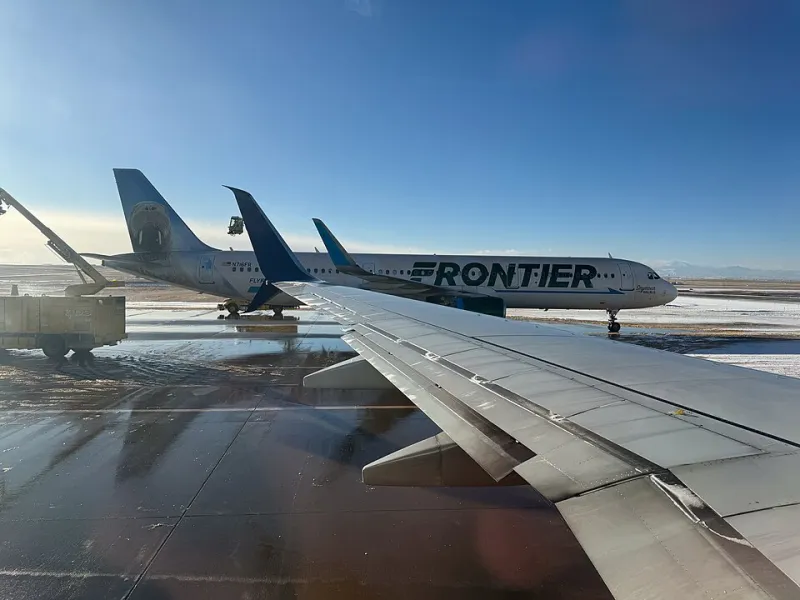
Denver's concourse layout is generous, but its weather is not. Afternoon thunderstorms in summer and lake-effect-adjacent snow in winter routinely compress gate availability, strand arriving aircraft at deice pads, and force holds that cascade across all three concourses.
What it teaches: Contingency planning. Run your Denver arrivals with a weather module active and random holds enabled. The skill being built is not docking precision — it's decision-making when the gate you were assigned twenty minutes ago is no longer the right answer.
4. Chicago O'Hare (ORD): The Geometry Gauntlet
O'Hare's older concourse footprints were never designed for today's aircraft mix. Narrowbody stands butt against widebody routes, taxiway clearances are unforgiving, and the terminal redevelopment has created a patchwork of stand dimensions that punish a pilot flying from memory.
What it teaches: Verify everything. O'Hare is the strongest argument in American aviation for consulting stand data before every arrival — wingspan limits, nose-in offsets, and tug capacity all vary pier to pier. Treat every ORD assignment as a fresh research problem.
5. Seattle-Tacoma (SEA): The Mixed-Flow Squeeze
Sea-Tac packs A-gates, B-gates, S-gates, and N-gates around a dual taxiway system that funnels everything through shared corridors. A single slow pushback ripples through the whole international arrivals queue, and the north-south gate split means wrong-side parking is a real, frequent error.
What it teaches: Flow awareness. Before docking, ask where your pushback will go and what traffic will be behind you in four minutes. SEA rewards simmers who think in sequences rather than single arrivals.
Building the Rotation
The point of this list is not tourism. Fly each of these airports once a month with a different constraint active — a tight turnaround at ATL, no guidance at LAX, weather at DEN — and you'll emerge a more complete ground operator than any single-airport routine can produce. The gate is where flights are actually won and lost. These five fields will prove it to you.