Gates That Lie: Identifying the Hidden Taxiway Conflicts That Make Available Stands Unreachable
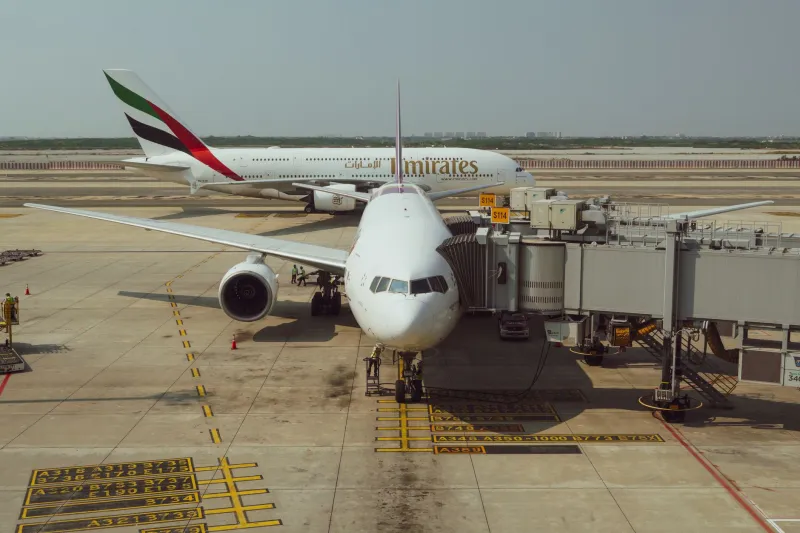
The gate availability display in your simulation shows green. The stand is unoccupied. The bridge is functional. By every metric the software exposes, the gate is ready to receive an aircraft. And yet, assigning that gate will initiate a sequence of problems that no amount of skillful piloting will resolve — because the path to that gate does not exist under current traffic conditions.
This is the phenomenon that experienced dispatchers refer to informally as a "paper gate" — a stand that is technically unoccupied but operationally inaccessible due to constraints that exist entirely on the airport surface, invisible to any display that reports only gate status. Understanding how to identify these situations, and why they occur with predictable frequency during complex traffic scenarios, is one of the most underappreciated competencies in serious simulation practice.
The Surface Beneath the Gate
Every gate assignment carries an implicit assumption: that a viable surface path exists between the active runway system and the assigned stand. In routine operations, this assumption holds. During complex traffic scenarios — particularly at congested US hub airports during peak periods — it fails with surprising regularity.
The failure modes are not random. They cluster around specific geometric and operational conditions that, once understood, become recognizable before they produce consequences.
The first and most common condition is pushback corridor saturation. Every gate that requires a powered pushback — which is to say, the majority of jet gates at major US airports — needs a clear corridor of defined width and length behind the stand to execute the maneuver. This corridor is not always a dedicated taxiway. At many terminals, it overlaps with the primary taxilane serving adjacent gates. When multiple aircraft are simultaneously in pushback, boarding, or taxi-out sequences on the same taxilane, the pushback corridor for any individual gate may be physically blocked even though the gate itself is empty.
Simulation add-ons that model ground traffic with realistic surface spacing will reproduce this condition accurately. Those that do not will allow you to assign the gate and initiate a pushback that immediately conflicts with an adjacent aircraft — producing either a ground collision event or an indefinite hold that the simulation cannot resolve cleanly.
Hold-Short Lines and the Gates They Protect
The second major failure mode involves hold-short line geometry. At airports with complex terminal configurations — Dallas/Fort Worth's semicircular terminal layout is a particularly instructive example — the hold-short lines protecting runway incursion-sensitive intersections can effectively quarantine entire gate clusters when inbound traffic is continuous.
At DFW, several gate positions on the inner arc of Terminal D require aircraft to cross or approach taxiways that carry direct runway access traffic during peak arrival banks. When the arrival rate is high enough that the hold-short lines at these intersections are continuously occupied, the taxi path to those gates is interrupted. An aircraft assigned to one of those stands may taxi to within 200 feet of its gate and then hold indefinitely, waiting for a gap in the crossing traffic that the simulation's ATC logic may never provide.
Real dispatchers at DFW are aware of which gates carry this vulnerability and apply informal avoidance rules during peak arrival windows. They do not wait for the conflict to materialize — they anticipate it from the traffic picture and assign alternate stands proactively. Simmers operating DFW scenery should develop the same spatial awareness.
Reading the Airport Diagram Like a Dispatcher
The skill that underlies all of this — the ability to identify paper gates before they cause problems — is fundamentally a skill of spatial reading. It requires looking at an airport diagram not as a map of where things are, but as a map of how things move.
The practical technique involves tracing every path an aircraft must follow to reach a given gate, from the runway exit to the final parking position, and identifying every point along that path where another aircraft's movement could create a block. This is not a complex procedure, but it requires deliberate attention that most simmers do not apply during gate assignment.
For each candidate gate, ask the following questions:
What is the inbound taxi route, and does it cross any active departure queues? At airports with parallel runway systems and centrally located terminal complexes — Chicago O'Hare is the archetype — inbound taxi routes frequently cross the ground paths used by departure queues. During simultaneous operations, these crossings become bottlenecks that extend taxi times and can produce indefinite holds.
What is the pushback direction, and does it conflict with any adjacent gate's taxi-out path? The pushback from most gates requires the aircraft to travel rearward along a path that intersects with the taxi-out corridor for at least one neighboring stand. If that neighbor is about to push back or taxi out simultaneously, the corridor is blocked.
Is the gate served by a single-access taxilane with no bypass route? Dead-end taxilanes — those that terminate at a gate cluster with no through connection to an alternate taxiway — are particularly vulnerable to blockage. A single disabled aircraft or an extended ground hold on such a taxilane can make every gate it serves unreachable until the obstruction clears.
What the Data Doesn't Show
Most simulation gate management systems — whether built into the core platform or provided by third-party add-ons — report gate status based on occupancy. A gate is available if no aircraft is parked at it. This is the correct answer to the wrong question.
The question that matters operationally is not whether the gate is occupied, but whether the gate is accessible given the current state of the entire airport surface. These are different questions with different answers, and the gap between them is where paper gates live.
Some advanced simulation frameworks are beginning to incorporate surface conflict modeling that flags gates as conditionally unavailable based on real-time traffic positions. These implementations represent a meaningful step toward operational realism. However, even in their absence, a simmer who has internalized the principles described here can replicate this awareness manually — by reading the surface picture before committing to an assignment rather than after a conflict has already materialized.
Building a Conflict Map for Your Home Airport
For simmers who regularly operate a specific airport scenery, investing time in building a personal conflict map is one of the highest-return preparation activities available. This involves identifying, in advance, which gate clusters are vulnerable to each of the failure modes described above, and under what traffic conditions each vulnerability becomes active.
A conflict map does not need to be elaborate. A printed airport diagram with handwritten annotations indicating pushback corridor overlaps, hold-short proximity risks, and single-access taxilane positions is sufficient. The act of creating it forces the spatial analysis that makes the knowledge usable under the time pressure of an active simulation session.
The gates that lie are not lying maliciously. They are simply reporting the one fact they know — that no aircraft is parked on them — while remaining silent about everything else. Your job, as an operations-minded simmer, is to ask the questions they cannot answer.