One Bridge, One Break: How a Jetbridge Misalignment Unravels an Entire Simulation Session
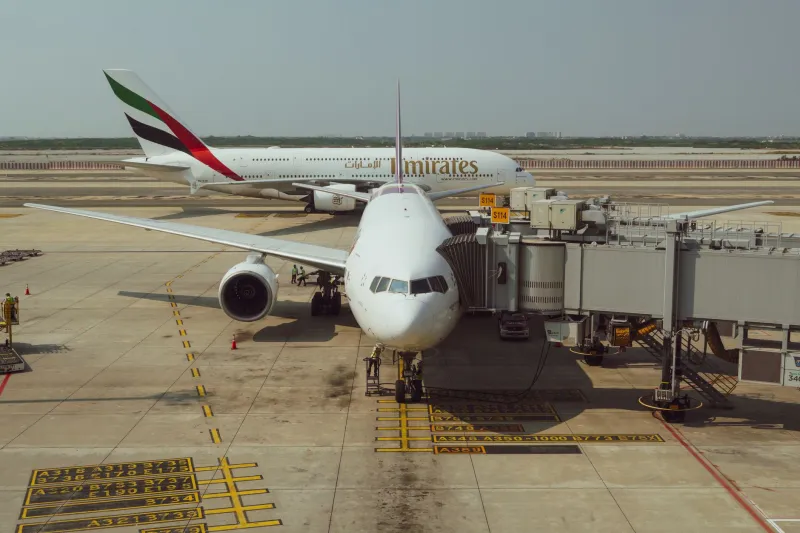
Most simmers treat a passenger boarding bridge as background scenery — an animated detail that confirms the aircraft has parked correctly. That assumption is precisely where operational realism begins to erode. In actual airport operations, the boarding bridge is a load-bearing element of the turnaround sequence. When it fails to align, or when add-on logic positions it incorrectly relative to the aircraft door sill, the consequences do not remain local. They spread outward through the gate schedule like a crack propagating through stressed glass.
Understanding why this happens — and how to identify it before it compounds — is the kind of operational literacy that distinguishes a technically proficient simmer from one who merely completes flights.
Why Jetbridge Alignment Failures Are Rarely Isolated Events
In a real terminal, a boarding bridge misalignment triggers an immediate notification to the gate agent, the operations center, and in many cases the airline's ground handling contractor. The aircraft cannot begin deplaning. Passengers remain seated. The inbound crew cannot begin their post-flight procedures on schedule. And critically, the outbound crew waiting to board is now standing at the gate holding area with no path to the aircraft.
Simulation add-ons that model this behavior — most notably high-fidelity ground services packages and advanced scenery frameworks used at major US hub airports — replicate this logic with varying degrees of accuracy. Some treat the bridge as a pass/fail binary: either it docks or it does not. Others model partial contact, door-height mismatches, and even the distinction between a bridge that physically touches the aircraft and one that achieves a sealed, boardable connection. The latter category is where cascading failures become visible.
When a bridge achieves partial contact in a simulation environment, the add-on may interpret the connection as successful and begin the boarding timer. Passengers begin loading against a clock that assumes normal throughput. However, because the seal is imperfect, the boarding rate is artificially reduced. The aircraft does not reach full passenger complement by the scheduled departure window. The gate remains occupied. The next inbound flight, already on approach, has no confirmed stand.
Tracing the Cascade: Gate to Gate to Terminal
The sequence that follows a single bridge failure is worth mapping in detail, because it is rarely intuitive.
Step one is the extended gate hold. The aircraft at the affected stand cannot push back on schedule. In a simulation using dynamic traffic injection — such as those powered by AI traffic frameworks modeling US domestic schedules — the inbound aircraft originally assigned to that gate is now circling or holding at a remote taxiway intersection.
Step two is the reassignment demand. The operations layer, whether human or automated, must identify an alternate stand. In a congested terminal simulation, particularly those modeling Chicago O'Hare, Dallas/Fort Worth, or Atlanta Hartsfield-Jackson, the alternate gate pool may already be saturated. The system begins evaluating overflow options: remote stands, hardstand positions, or gates in adjacent concourses that require extended taxi routing.
Step three is the taxi conflict multiplication. Extended taxi routes to overflow gates introduce new hold-short requirements. Aircraft that were previously clear of each other's paths are now competing for the same taxiway segments. Departure queues lengthen. The runway utilization model — if your simulation tracks it — begins to register degradation.
Step four is the schedule compression. Flights that were separated by comfortable buffers are now stacking. The simulation's clock, which had been absorbing small variances without visible consequence, is now running a deficit that no single action can recover.
All of this traces back to one bridge that did not seat correctly against one door frame.
How Add-Ons Model — and Mismodel — Bridge Physics
Not all simulation packages handle boarding bridge logic with equal rigor. Several popular scenery add-ons for major US airports use static bridge animations that trigger based on proximity thresholds rather than genuine geometric contact calculations. In these implementations, a bridge will appear to dock successfully even when the aircraft's nose-in parking position is several feet off the centerline. The visual reads as correct; the operational logic does not reflect the discrepancy.
More sophisticated packages — particularly those designed for use with high-fidelity aircraft models that accurately simulate door sill heights across multiple variants — calculate bridge extension angle, elevation differential, and approach vector. These systems will flag a misalignment and either prevent boarding initiation or introduce a delay penalty that propagates into the turnaround timer.
Simmers running these advanced configurations should treat any unexpected extension in boarding time as a potential bridge alignment issue, not merely a passenger count artifact. Reviewing the bridge contact state in the add-on's status interface — if one is exposed — is the first diagnostic step.
Preventive Protocols: What Professional Dispatchers Know
At real US airports, ground operations coordinators maintain awareness of bridge serviceability before an aircraft ever turns off the taxiway. Bridges are inspected at shift change, logged for any mechanical restrictions, and in some cases pre-positioned to a standby angle based on the scheduled aircraft type. This pre-staging discipline is one of the most underrepresented behaviors in simulation practice.
For simmers, the equivalent protocol involves verifying gate-to-aircraft type compatibility before committing to a stand assignment. If the add-on documentation or airport data specifies bridge reach limits or door height parameters for a given gate, those figures should be cross-referenced against the aircraft variant being flown. A narrowbody configured for a standard door sill height will not necessarily interface correctly with a bridge calibrated for a stretched variant, even at the same gate.
Additionally, simmers should develop the habit of monitoring boarding progress against expected throughput. If a 150-seat regional jet is still boarding at the twenty-minute mark with no system alert, that is a signal worth investigating — not an anomaly to ignore in favor of completing the pre-departure checklist.
Rebuilding After the Cascade
Once a cascading failure has propagated beyond two or three gates, recovery is not a single action but a sequence of triage decisions. The priority framework used by real operations centers at US hubs places departing wide-body international flights at the top of the recovery queue, followed by connecting hub banks, and finally point-to-point domestic services with schedule flexibility.
Simmers managing a terminal-level simulation should apply the same hierarchy. Identify which flights in the stack carry the highest downstream consequence — those feeding connecting banks or operating on minimum turn times — and absorb delays at the lower-priority positions rather than distributing them uniformly.
The boarding bridge is rarely the element that receives analytical attention in post-session reviews. It should be. Because in a system as tightly coupled as a major US terminal, the smallest mechanical failure at the interface between aircraft and gate is never truly small.